
Sort by actual use
Start by gathering lids with their intended vessels while everything is clean and cool. Identify confirmed matches using product information rather than assuming similar diameters are interchangeable. Set aside items whose purpose is unclear until you can check them. A cupboard filled with unidentified accessories is harder to organise because every retrieval becomes a search through shapes whose compatibility no one can explain confidently.
Separate frequently used lids from occasional ones and note which vessels genuinely need them for regular recipes. This is not a reason to discard an unfamiliar accessory hastily; it is a way to understand the collection before choosing storage equipment. If a replacement is needed, use the maker’s reference and fit guidance. A tidy display of approximately matching lids is less useful than a modest set with clear roles.
Measure with the knobs included
A lid may look thin from its edge while needing substantial space around a knob or handle. Measure that depth as well as the diameter before choosing a drawer divider or shelf arrangement. Include the cupboard opening and the room needed to take hold. A layout that fits only when pieces are pushed tightly together may be inconvenient each time someone tries to remove a particular lid without disturbing the rest.

Consider the weight and fragility of the pieces. Stable support matters more than fitting the maximum number into one narrow gap. Avoid leaning a lid where opening the door can dislodge it or where another item must be balanced against it to keep it upright. The storage arrangement should remain secure during ordinary use, including when a household member retrieves an item without first reconstructing the organiser’s intended sequence.
Choose one simple arrangement
An upright divider, a suitable drawer section or a clear shelf can each work when matched to the actual space and products. You do not need a specialised accessory before understanding the measurements. Test the arrangement with cool cookware and make sure each lid can be reached comfortably. Avoid fixing hooks or racks without confirming the suitability and secure installation required for the surface and load involved.
Keep the commonly used lid near its vessel where practical, but do not force every piece into a nested stack if that makes access awkward. A pan’s storage instructions may also restrict what should be placed against its cooking surface. Treat the lid arrangement and the pan arrangement together. A solution that makes one tidy by creating scratches, unstable piles or difficult lifting in the other section has not solved the overall problem.
Provide a separate cooking landing place
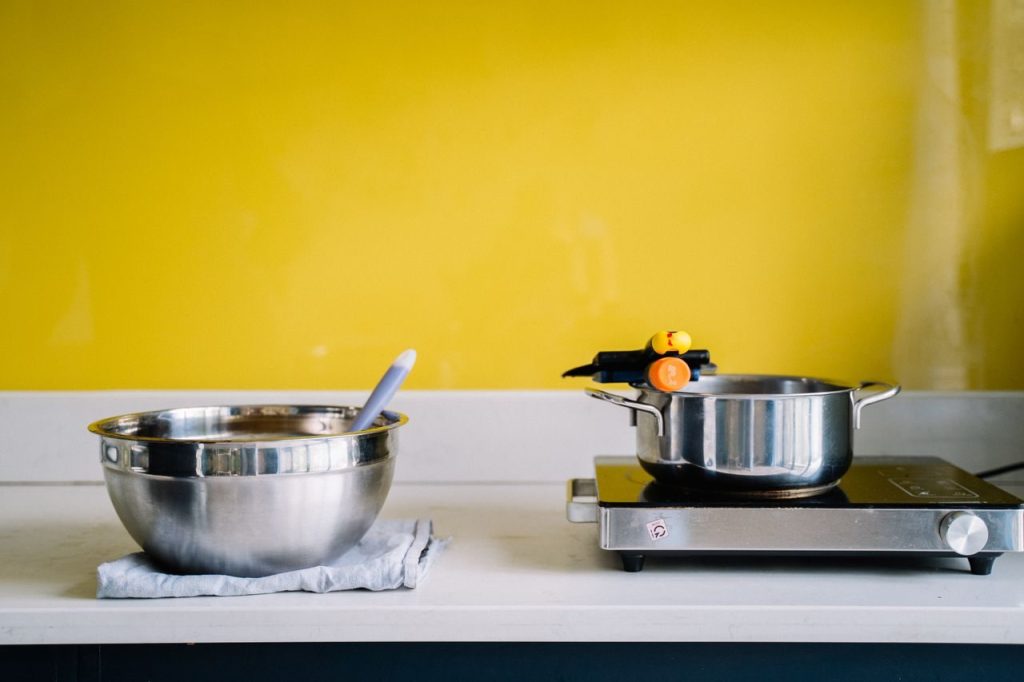
Storage is for cookware ready to put away, not a destination for a hot lid in the middle of a recipe. Identify a stable appropriate landing place beside the cooking area for that stage. Keep it clear before heating begins so you do not need to balance the lid on another pot or hold it awkwardly while searching for space. This small distinction keeps the cupboard solution from becoming an improvised part of active cooking.
After use, follow the lid’s cooling and cleaning instructions before returning it to its storage position. Check fittings and unusual damage as a separate care question rather than hiding the item in the new organiser. If a knob is loose or the condition raises concern, ask the maker about the exact product. A storage project cannot determine whether an accessory remains suitable for hot use simply because it now has a labelled slot.
Make the system understandable
Use a plain label or a short household explanation if several similar lids cause confusion. Product references or a photograph of the intended pair can be helpful without creating a complicated inventory. The goal is that anyone who cooks or washes up can return the item to an obvious place. If only the organiser can maintain the arrangement, simplify it until ordinary retrieval and replacement do not require special instructions.
Review the collection when it changes
When a new vessel or replacement lid arrives, assign it a stable place and confirm compatibility before mixing it into the existing collection. Revisit the layout if the pieces become crowded or difficult to remove. A useful lid system grows from clear matches, realistic measurements and comfortable access. It does not need every accessory displayed or an expensive organiser; it needs each retained piece to have a known purpose and a secure home.