Define the small task
A small saucepan earns its place when it handles a regular job without making the work awkward. Begin with the foods you prepare in modest quantities: a sauce, porridge or a small portion of vegetables. Note whether the recipe requires vigorous stirring, gentle simmering or pouring into another vessel. Those movements help define the useful shape more precisely than choosing the smallest capacity listed by a retailer.
Look at the quantity you usually make rather than the occasional larger recipe. A vessel that suits a single sauce may not be appropriate for a meal with more liquid or stirring space. Keep another pot available for those different tasks. Buying a small saucepan is a chance to fill a genuine gap, not a reason to force every modest meal into the same piece of cookware.
Measure depth and base
Ask for internal dimensions if the listing gives only capacity. A tall narrow saucepan and a wider shallow one can hold similar volumes while giving you a different working area. Consider whether your usual whisk, spoon or spatula reaches the corners easily. The goal is comfortable access to the food without scraping at an awkward angle or choosing an oversized utensil for a compact vessel.
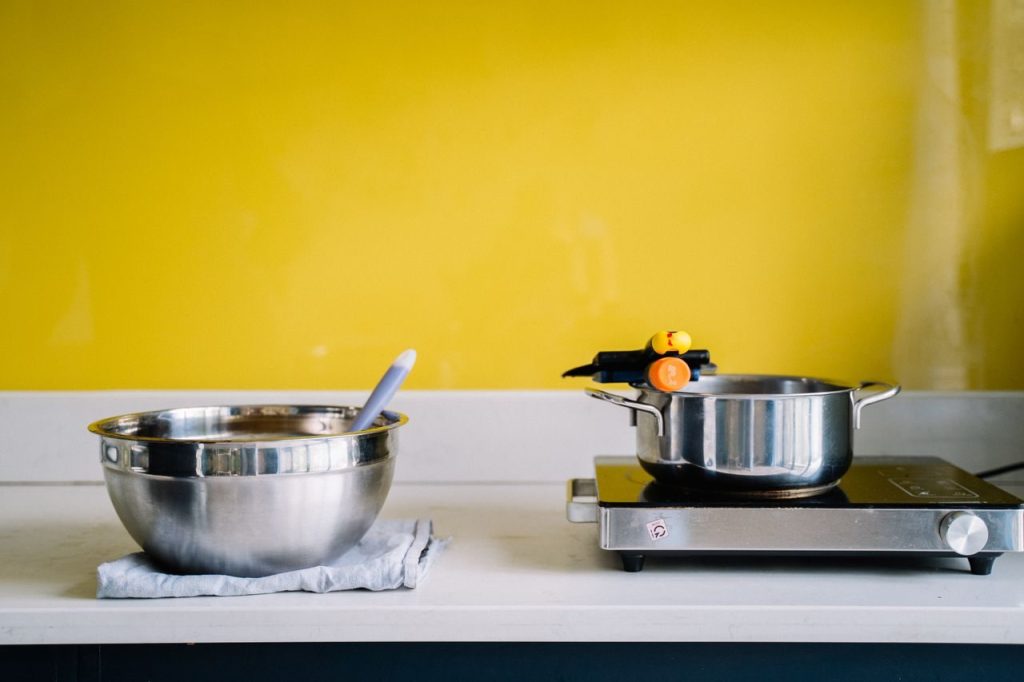
Check the base against the hob manual and the maker’s compatibility statement. Small pans can require particular attention to the appliance’s minimum size or support arrangements. Do not improvise a support or use an unstable placement to make a vessel fit. If the pan and cooker are unsuitable together, choose a different size or model with clear instructions rather than treating compactness as the overriding requirement.
Examine the pouring arrangement
Think about the point where the saucepan contains hot food and needs to be emptied. A pouring lip may be useful, but it does not remove the need for a secure grip and a stable destination. Consider which hand you normally use and whether the lip is positioned conveniently. Product photographs from more than one angle can help reveal details that a simple side view leaves unclear.
Assess the handle with your usual protective glove where possible. Check that it offers enough room for a comfortable grip without feeling unnecessarily long for the pan. Do not assume a handle remains cool because a retailer calls it ergonomic. Read the manufacturer’s guidance and plan to use suitable protection. Comfort, thermal instructions and ease of pouring are separate questions that should all be answered before purchase.
Plan the washing routine
A compact saucepan can still be inconvenient to clean if your normal tools cannot reach it comfortably. Look at the interior corners, handle fittings and lid if supplied. Check what the maker permits for the surface and whether dishwasher use is allowed or preferred. Avoid transferring a cleaning method from an older pot with a different material or finish simply because both vessels are small.
Choose an accessible storage place close to the tools used with it. If the saucepan is buried beneath larger pots, its convenience may be lost before cooking begins. Consider whether the handle fits within the cupboard without sticking out or making the stack unstable. A small item should simplify a repeated task; it should not need a complicated retrieval routine that discourages using it for a quick meal.
Compare against a familiar vessel
Use an existing saucepan as a reference and identify exactly what you want to change. It might be too deep for stirring a small sauce, too large for the cooker zone or uncomfortable to pour from. Record the relevant measurements before ordering. This gives you a specific standard for comparison and prevents a smaller-looking photograph from being mistaken for a genuinely more suitable item.
Keep the receipt, model reference and care instructions together once you choose. After several ordinary meals, assess whether the saucepan has a distinct role alongside the rest of your cookware. There is no need to turn that personal experience into a universal recommendation. A good small saucepan is simply one that matches your portions, appliance, hands and washing routine closely enough to make a recurring kitchen job easier.