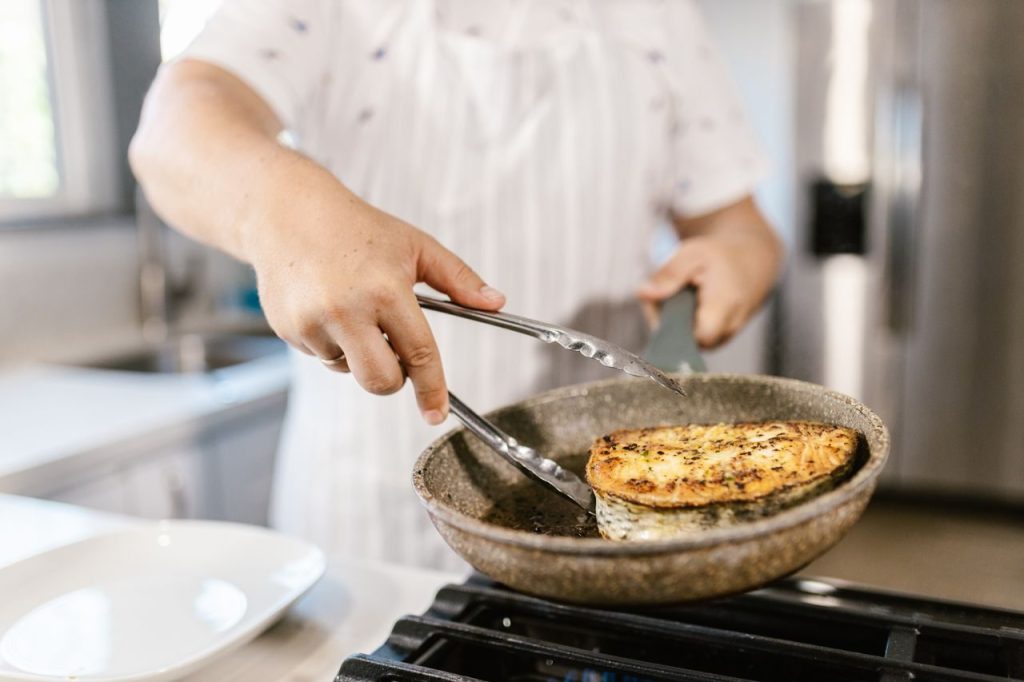
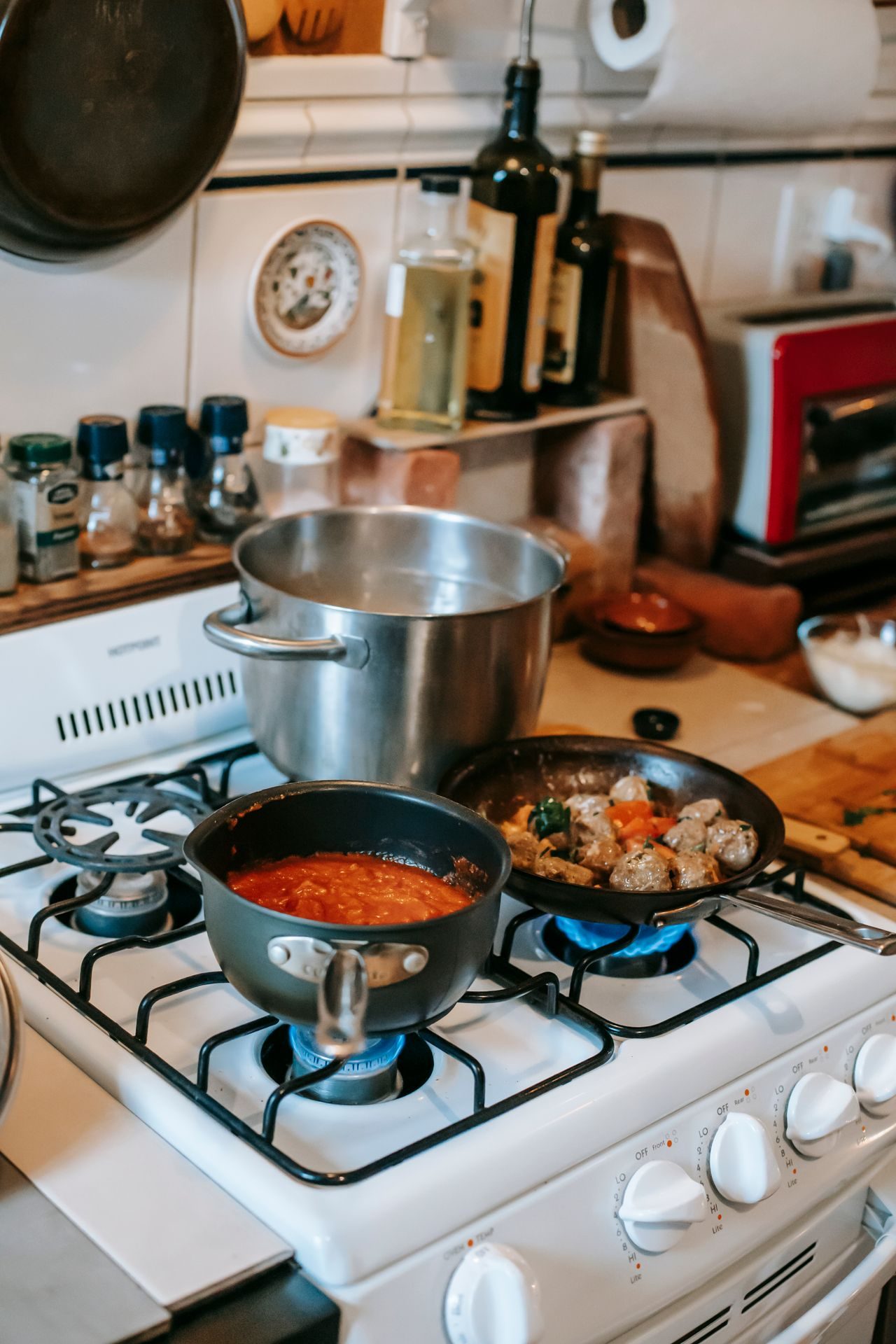
Choosing between open racks and enclosed cupboards affects how easily each pan can be checked for residue or moisture after washing. The decision also determines how often different materials receive the airflow or darkness they need to stay in good condition.
Both options require planning so that heavier pieces do not rest on lighter ones and so that lids remain near their matching bodies. The following sections set out the practical differences for everyday routines.
Airflow and drying times on open racks
Open racks allow air to circulate around every surface once pans are washed and towel-dried. Stainless steel benefits from this because any remaining water spots evaporate quickly and reduce the chance of water marks forming. Cast iron pieces, however, must still be dried fully by hand before hanging, as even brief exposure to room humidity can start surface rust if seasoning is thin.
Non-stick surfaces dry fast on racks but should not hang where direct sunlight reaches them for long periods, since prolonged heat can affect the coating over repeated cycles. Position racks away from windows or hobs that stay warm after use.
Protection from dust and kitchen grease in enclosed cupboards
Enclosed cupboards keep fine dust and airborne grease off stored pans, which matters most for stainless steel used for searing. A light film of grease can transfer during cooking and create uneven browning. Cast iron stored inside a cupboard stays darker and needs less frequent re-oiling, yet the enclosed space must still allow occasional air exchange so condensation does not collect on lids.
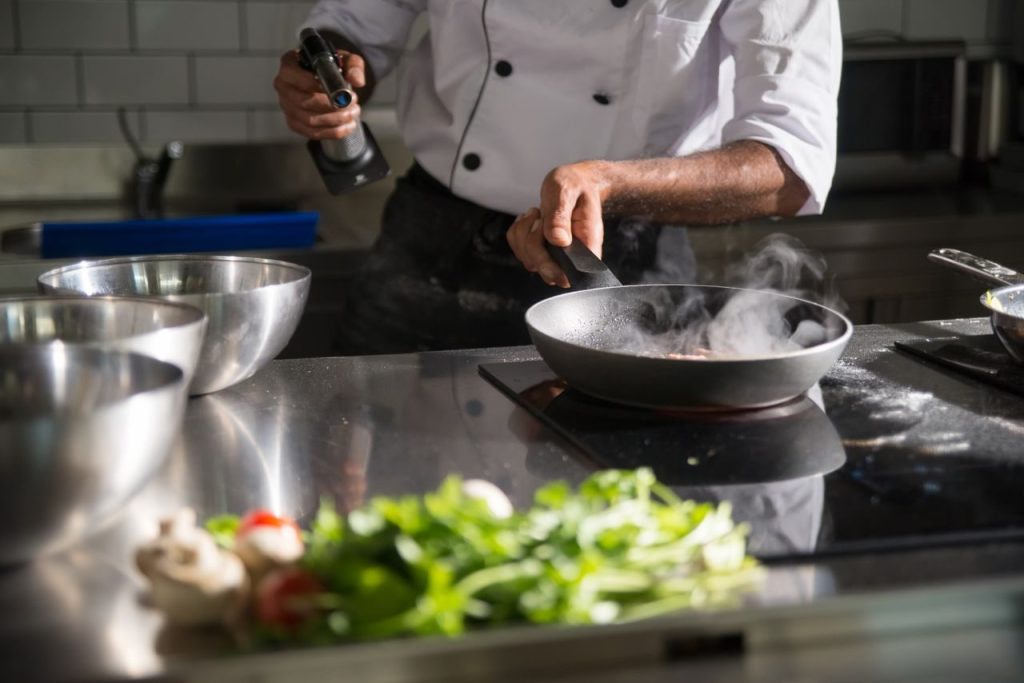
Non-stick pans kept in cupboards remain free of abrasive particles that could scratch the coating when pans are slid in and out. The trade-off is that moisture trapped inside the cupboard after washing can linger longer, so a short air-dry on a rack before transfer is often necessary.
Weight distribution and surface contact
Racks usually support pans by their handles or rims. Heavy cast iron skillets hung this way place steady downward pull on the fixing points; check that the rack is fixed into wall studs rather than plaster alone. Stainless steel stockpots stored on the same rack should sit on lower hooks so their weight does not press against lighter non-stick frying pans above them.
Inside cupboards, shelves distribute weight across the base of each piece. Place cast iron on the lowest shelf and stack lighter stainless or non-stick items above, using a folded tea towel or silicone mat between each layer to avoid metal-on-metal marks.
Inspection frequency for material-specific issues
Open racks make daily visual checks simple. A quick glance shows whether cast iron has developed rust spots or whether non-stick surfaces have food residue along the rim. This supports the habit of wiping cast iron with a thin oil layer after every use.
Cupboards require opening the door each time, which may reduce how often owners notice small problems. A practical compromise is to keep one or two frequently used pans on a small wall hook near the hob while storing the rest inside, so the routine inspection still happens for the pieces that see daily heat.
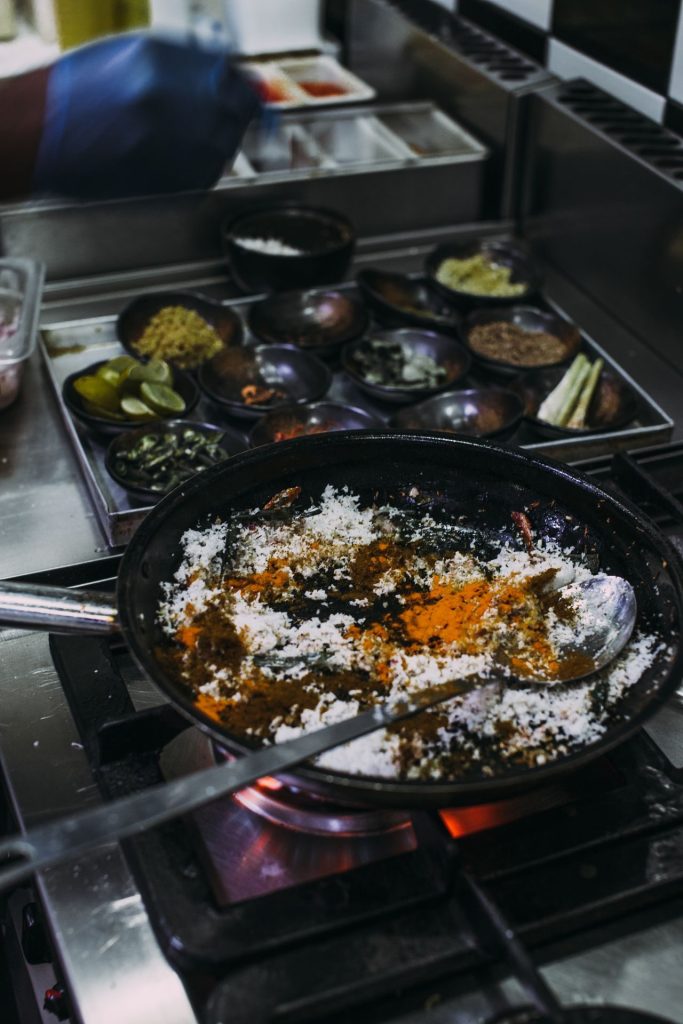
Space use and retrieval order
Racks use vertical wall space and leave floor-level cupboard room free for other items. They work best when the kitchen layout allows clear access without stretching over the hob. Retrieval is immediate, yet pans on upper hooks can be awkward to lift down when hands are wet.
Cupboards make use of existing cabinet volume and keep everything behind a single door. Dividers or pull-out shelves help maintain order so that a needed stainless sauté pan does not sit behind three cast iron Dutch ovens. The extra step of opening and closing doors adds seconds to each retrieval but protects all materials from accidental knocks.
Temperature and humidity considerations near the hob
Racks placed close to the hob expose pans to occasional warm air and steam. Stainless steel tolerates this without change, yet cast iron stored there may require more frequent oiling because warmth can drive off the protective layer. Non-stick coatings should stay at least 30 cm from the hob edge to avoid unnecessary heat cycling while stored.
Cupboards situated on an interior wall maintain steadier temperature and lower humidity swings. This environment suits cast iron that has just been seasoned, because the seasoning layer hardens more evenly without rapid temperature changes. Stainless steel stored here shows fewer water spots if pans are put away completely dry.
Combining both approaches for mixed collections
Many kitchens gain from using a short open rack for the two or three pans used most often and an enclosed cupboard for the remainder. The rack holds items that need quick drying and frequent checks, while the cupboard protects the rest from dust. Lids can be stored upright in a narrow cupboard slot so they do not scratch pan interiors when removed.
Whichever combination is chosen, keep a small stack of absorbent cloths or dedicated drying mats in the same area. After washing, each material can finish drying according to its own needs before being returned to its assigned place, reducing the risk of cross-contamination or surface damage over time.