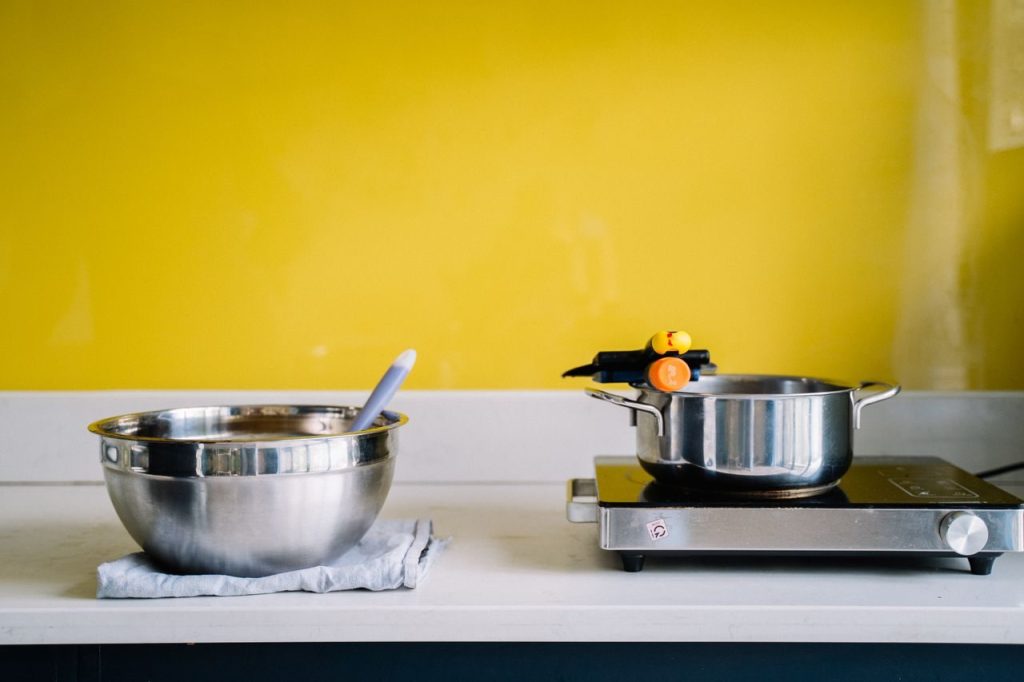
Identify the job behind the name
A milk pan or a small specialist pot may be sold around one ingredient, yet the useful question is which repeated task it would perform in your kitchen. Think about the quantity, the need to stir and how the contents are transferred. Do not buy solely because the name appears on an essentials list. A regular job provides a stronger reason than completing a matching range of cookware.
Compare that job with the saucepan you already own. Is it too deep to reach comfortably, awkward to pour from or unnecessarily large for a small quantity? Identify the specific problem before considering a new shape. A specialist pot earns its place by making that problem easier to manage, not simply by being smaller or having an attractive pouring lip in the product photograph.
Check small-pan compatibility
Small vessels need a careful check against the hob’s requirements. Read both the appliance manual and the product’s compatibility information, including any relevant minimum base size or support instructions. Do not assume a pan works on your cooker because a larger item from the same range does. If a required arrangement is unclear, ask the manufacturer rather than improvising a support or balancing the vessel between unsuitable contact points.

Look at the actual base measurement and the overall handle length. A very compact body can still occupy surprising space because its handle extends over the worktop or towards another zone. Compare that footprint with the way you normally organise the hob. The goal is a stable, usable arrangement rather than simply finding a small vessel that can be placed somewhere near a heat source.
Assess stirring and pouring
Consider whether your usual spoon or spatula reaches the interior corners comfortably. A tiny pot can be frustrating if it needs another set of tools to perform a simple task. Check the depth and opening as well as the volume. Enough room for stirring matters more than an attractive capacity figure when the food requires attention and movement throughout the recipe rather than merely being held in the vessel.
Examine the pouring arrangement from the perspective of the hand you use. A lip should be convenient without forcing an awkward grip or turning movement. Have a stable destination ready before transferring hot contents. A spout does not remove the need for appropriate protective gloves or careful handling, and the manufacturer’s instructions should settle questions about heated handles rather than a retailer’s general claim of comfortable design.

Plan cleaning and access
Check the surface material and the manufacturer’s washing recommendations before deciding that a small pot will be easy to maintain. Narrow interiors, fittings and shaped rims may need different attention from a simple open saucepan. Avoid borrowing cleaning advice from an unrelated vessel. The right tools should be compatible with the finish and readily available, not an improvised solution discovered when residue has already become difficult to remove.
Choose a storage place that makes the pot accessible without displacing a pile of larger items. If it will be used frequently, a complicated retrieval arrangement undermines its convenience. Include the handle in the measurement and make the stack stable if nesting is permitted. A specialist vessel that adds clutter without improving the start and end of a meal may not be the practical upgrade its name suggests.
Buy only the missing function
List three ordinary occasions when the proposed pot would be useful, then describe how it changes the work on each occasion. If the answers remain vague, use your current equipment a little longer and note the real inconvenience. This avoids buying for a hypothetical kitchen routine. It also gives you better measurements and handling requirements when you eventually compare specific products or consider a replacement for a worn vessel.
A small specialist pot is neither automatically essential nor automatically unnecessary. It can be a sensible choice when it matches a repeated quantity, works safely with the cooker and pours comfortably into the intended destination. Keep the product reference and care instructions once purchased. Judge the decision by the clarity of its role in your own collection rather than by how complete the cupboard looks when every matching piece is arranged together.