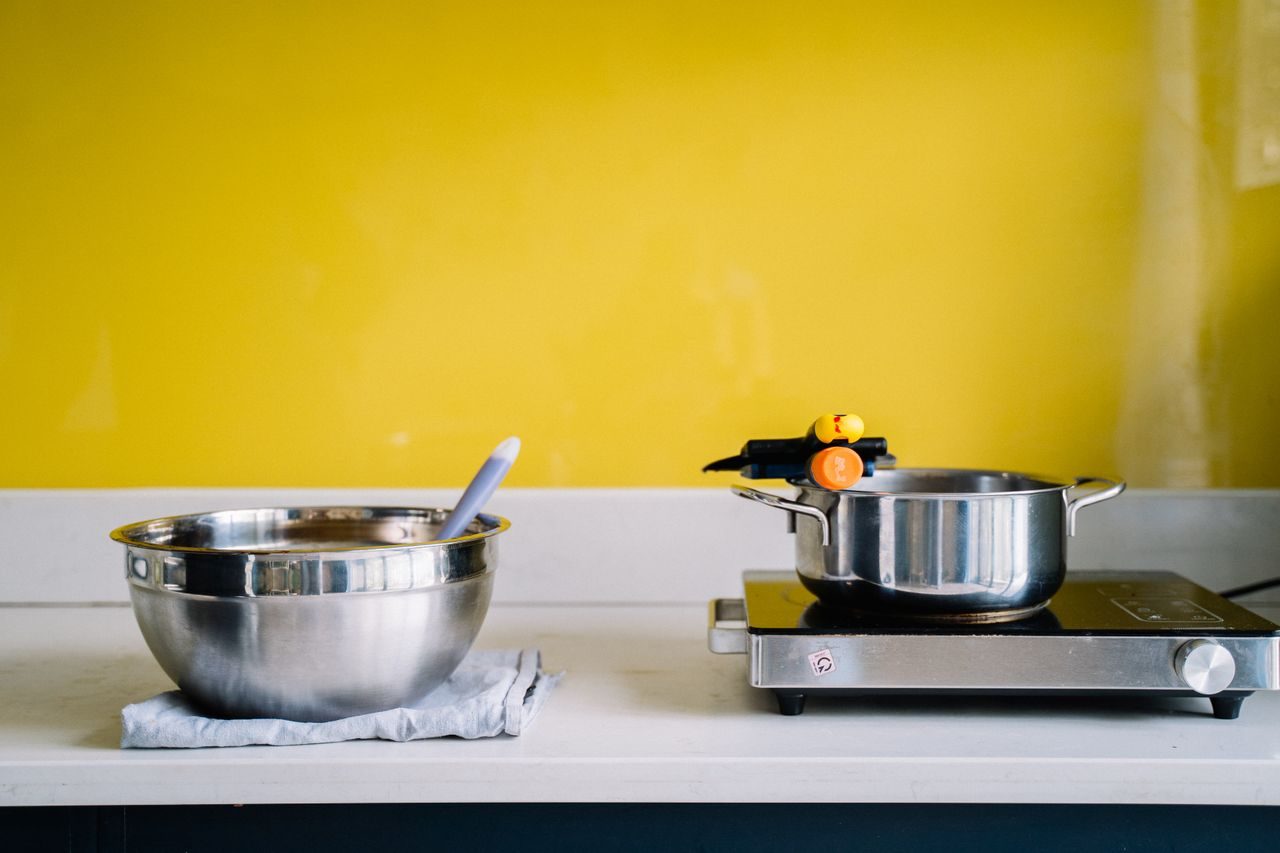
Identify the surface you own
Cast iron cookware is not one identical care category. Establish whether the cooking surface is seasoned bare iron, enamelled or another documented finish before choosing a routine. A dark interior photograph is not enough to settle the question confidently. Find the maker and model reference and read the product instructions. Advice for restoring a neglected bare iron pan should not be applied automatically to an enamelled casserole that merely shares the same underlying material.
If you inherit or buy a used vessel and cannot identify its surface or condition, ask for appropriate advice before cooking. Clear photographs of the interior, base, rim and markings help make the enquiry specific. Do not treat every old pan as ready to use because a seller calls it traditional. The care routine should begin with knowing what the item is, not with an improvised treatment intended to make its appearance more uniform.
Keep routine care separate from restoration
Routine care follows an ordinary meal in a pan whose condition is understood. Restoration addresses a different problem, such as neglect or a surface that needs assessment. Keep those tasks separate rather than performing an aggressive treatment after every use. A simple repeatable routine should follow the maker’s instructions and fit the kitchen, while a more substantial intervention needs its own clear reason and appropriate guidance for that exact product.
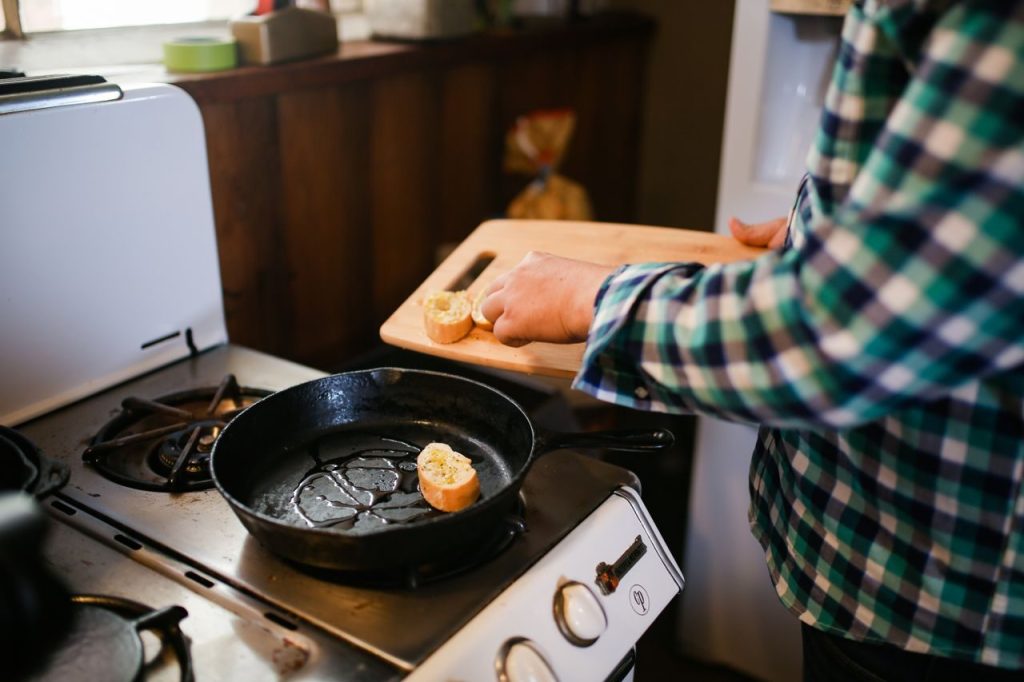
Lodge’s seasoned cookware guidance describes washing, thorough drying and a light application of oil as relevant elements for its seasoned surfaces. Read the manufacturer’s complete instructions rather than copying a slogan from a discussion about cast iron. This is not evidence that every finish should be oiled or every cleaning problem handled the same way. Product identity remains important even when the vessel’s material has a long familiar reputation.
Prepare the washing tools
Keep compatible cleaning tools available before the pan needs attention. A suitable brush, cloth or scraper identified by the maker can make the routine easier than searching for a tool while residue dries. Avoid assuming that the most abrasive pad beside the sink is appropriate. Check the guidance for any stubborn food rather than increasing pressure or choosing a strong cleaner simply because the vessel feels robust and heavy.
Do not build the routine around absolute folklore, including an assumption that any contact with washing-up liquid is prohibited. Follow the actual maker’s instructions for your product. Clear practical information is easier to share than a complicated collection of rules whose origin no one can explain. In a shared kitchen, agree which tools belong with the pan and where the care guidance can be found when another person washes it.

Make drying and storage realistic
After the recommended washing step, complete the drying and any further surface care required by the manufacturer. Keep that sequence within your normal evening routine rather than planning to finish it at an unspecified time later. The useful question is whether you can carry it out consistently. A pan chosen for a favourite meal should not depend on an elaborate ritual that becomes impractical as soon as dinner is late or someone else does the washing.
Store the vessel in a stable accessible position, following the product’s requirements. Consider loaded and empty handling, particularly if the pan is heavy and the cupboard is low or high. A frequently used item should not need to be pulled from beneath a precarious stack. Organising the space helps routine care because the clean pan has an obvious destination rather than being left indefinitely wherever it was last placed after drying.
Keep expectations grounded
A care routine is not a guarantee that cookware will never change or need attention. If damage or an unfamiliar surface condition appears, consult the maker with the product reference instead of assuming every problem has the same home remedy. Keep cosmetic preferences separate from questions about suitability for continued use. This avoids both unnecessary intervention and casual reassurance based only on the broad reputation of cast iron as durable equipment.
Read the official seasoned cast iron care guidance where relevant and use the instructions for your own vessel. An ordinary home kitchen benefits from a clear sequence that people can actually follow: identify the surface, use the permitted tools, complete the required aftercare and store the pan securely. That is more useful than treating every meal as a restoration project or relying on an unexplained list of universal prohibitions.