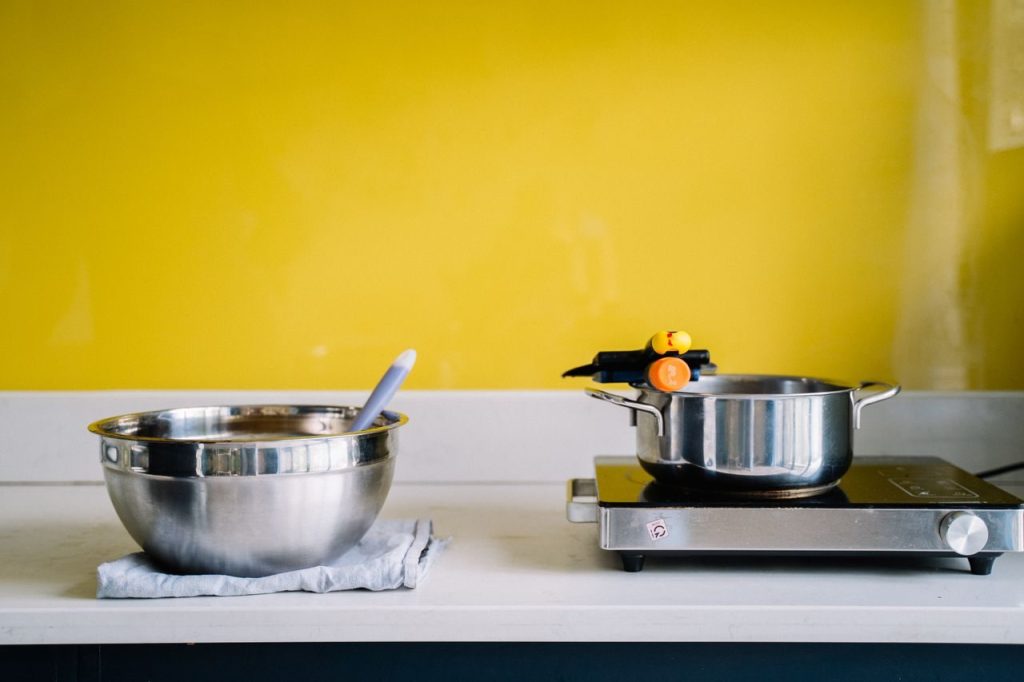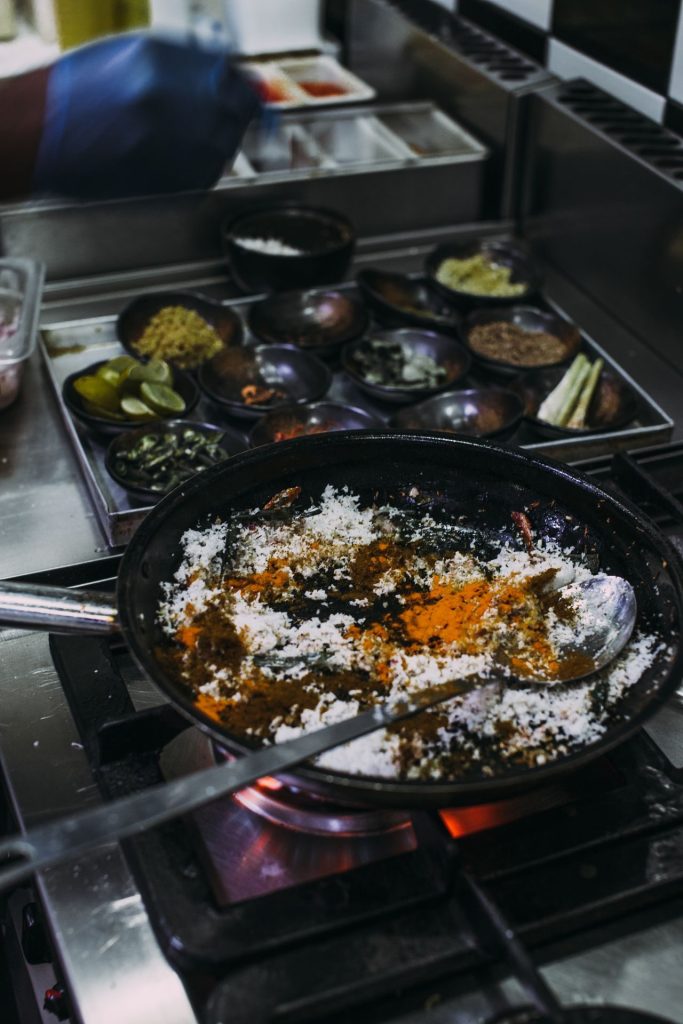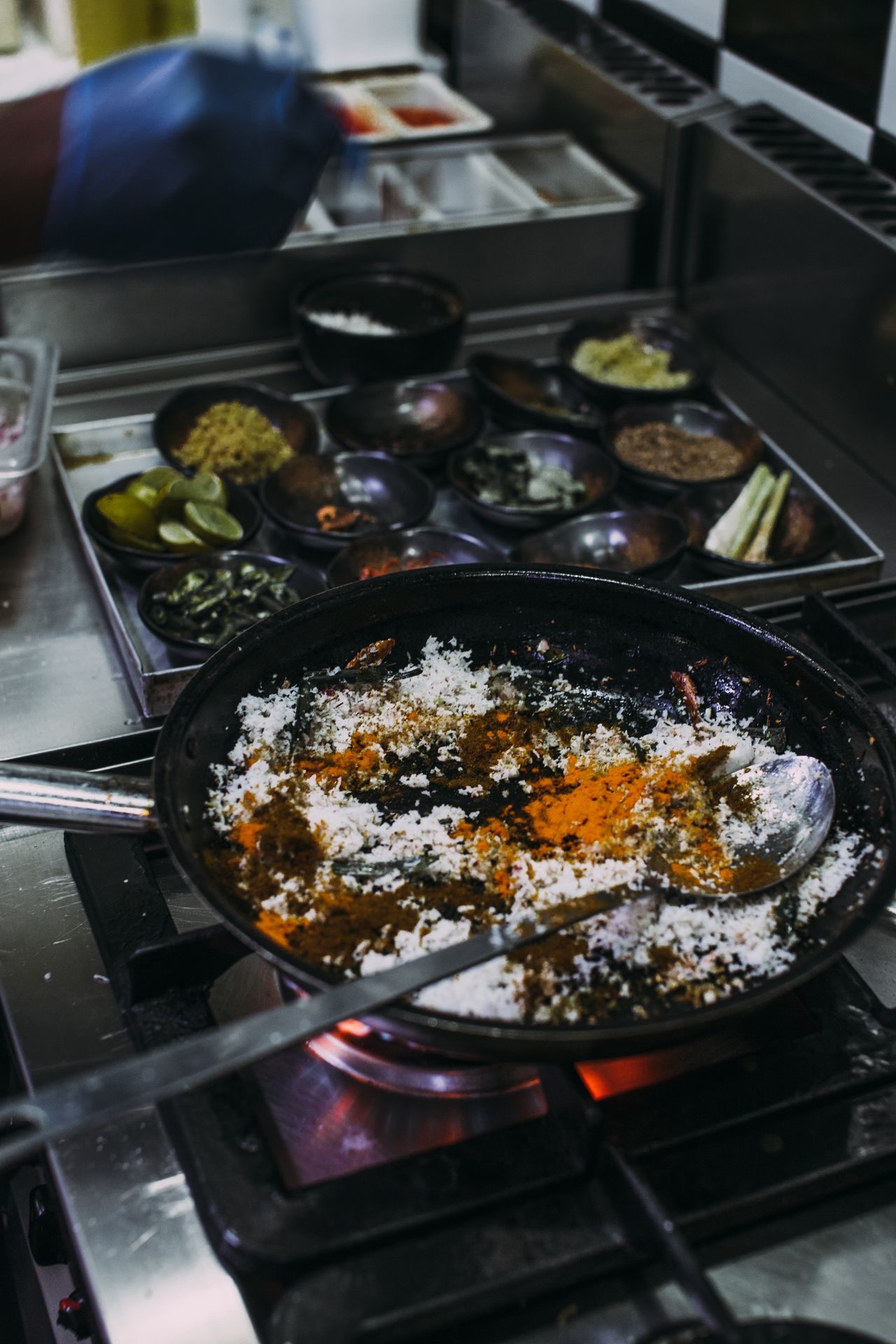
Many cooks notice food sticking or scorching after they move a pan between hobs or alter the power level partway through a recipe. The cause is often a mismatch between how quickly each hob type changes temperature and the way the pan base transfers that heat.
Induction, ceramic and gas surfaces all require different timing when the control is turned up or down. Recognising these differences before the pan is on the hob prevents most mid-cook problems.
Confirming base type before the first heat adjustment
Induction hobs only heat magnetic bases. A quick test with a fridge magnet shows whether the pan will work; if the magnet does not grip, the hob will not transfer energy and the control will have no effect. Ceramic hobs need flat, smooth bases so the entire surface stays in contact; any warp means heat concentrates in one spot and the setting must be lowered sooner than expected. Gas burners tolerate slight curves but still perform best with bases that sit level on the grate.
Manufacturer manuals list the minimum base diameter that will register on each hob zone. Using a pan smaller than this wastes energy and forces the control higher than necessary, leading to sudden overheating when ingredients are added.
Allowing time for the hob to register the new setting
Induction responds within seconds, so a small turn of the dial can raise the temperature faster than the cook expects. Ceramic elements keep heating after the knob is lowered, so the same adjustment must be made earlier. Gas stops delivering heat the moment the flame is reduced, yet the pan itself retains heat longer than many cooks allow for.
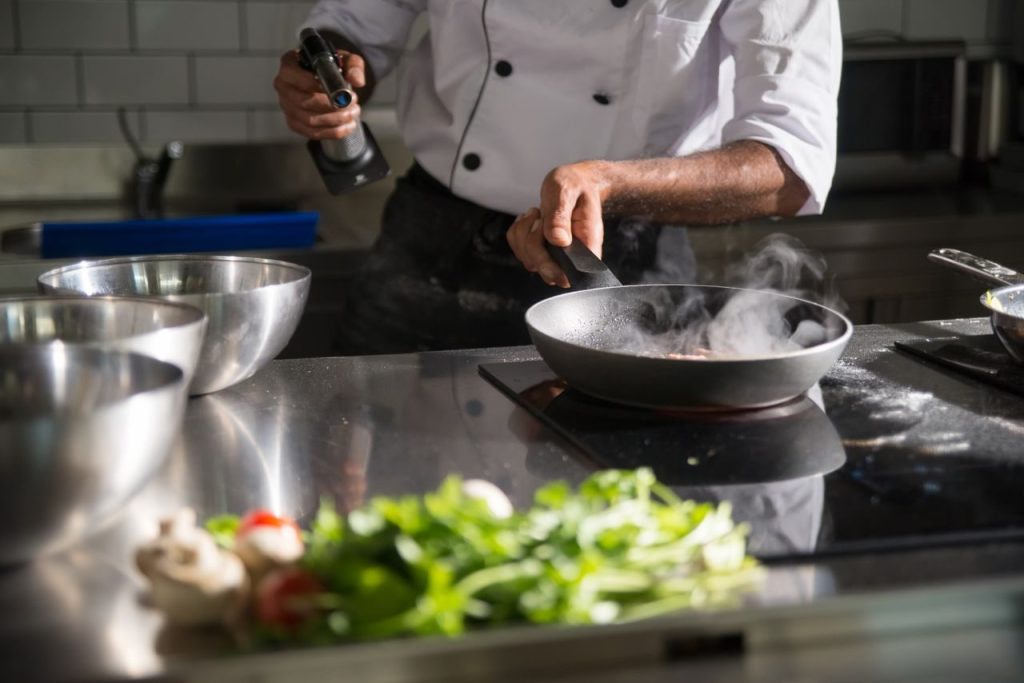
A practical sequence is to set the control, wait fifteen seconds on induction or thirty seconds on ceramic, then check whether the contents have begun to change before making a second adjustment. This prevents repeated overshooting that ends with scorched edges and undercooked centres.
Lowering power before adding cold ingredients
Placing chilled food straight into a hot pan on induction often triggers an automatic power surge as the hob tries to maintain the set level. The result is localised overheating at the base. On ceramic the same action can cause the element to cycle on and off, producing uneven cooking. Reducing the setting by one or two increments before the addition gives the pan time to equalise.
Stainless steel and clad pans tolerate this step better than thin aluminium because their thicker bases spread the temperature change. Non-stick coatings require an even lower starting point to avoid damage when the surface cools rapidly under the new load.
Using simmer zones without relying on the lowest numbered setting
Many induction and ceramic hobs have a separate low-power zone or a dedicated simmer setting. Relying only on the main dial at its lowest mark often keeps the element cycling rather than holding a steady temperature. The separate zone maintains contact with the base at a lower wattage and reduces the chance of the liquid dropping below a gentle bubble.
Gas hobs achieve the same result by moving the pan partially off the burner or using a diffuser plate. Either method keeps the heat source smaller than the base so the edges do not overheat while the centre simmers.
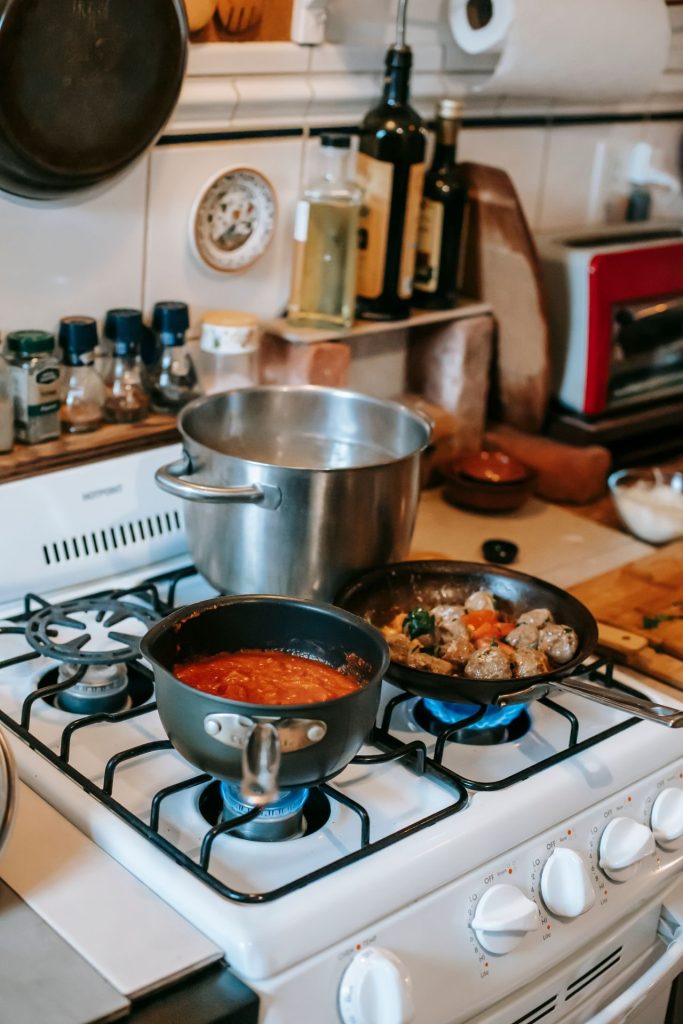
Accounting for residual heat after the control is turned off
Ceramic hobs continue to radiate heat for several minutes. Leaving a pan on the surface after switching off can finish cooking or reduce a sauce without further energy input. Induction stops immediately, so any residual effect comes only from the pan itself. Gas leaves the grate warm but the pan cools faster once removed.
Cooks who move the same pan between hob types must adjust their timing: a sauce that finishes on ceramic can be taken off induction two minutes earlier to reach the same consistency.
Matching pan diameter to the active zone throughout the cook
When a recipe calls for a change from high to low heat, the active heating area on some hobs also changes. Using the outer ring of a gas burner or the full ceramic zone for simmering wastes energy and overheats the pan sides. Switching to the inner ring or a smaller zone keeps the heat concentrated under the food and reduces the need for constant stirring.
Checking the zone markings before the pan is placed prevents the common error of cooking on a zone that is larger than the base once the setting is lowered.
Reviewing the hob manual for automatic power limits
Some induction models reduce power automatically when multiple zones are in use. Placing two pans on high at the same time can drop the output on each, so the intended setting is never reached. Ceramic hobs may cycle more frequently under the same load. Reading the section on maximum simultaneous output before starting a two-pan meal avoids unexpected drops in temperature.
These adjustments become routine once the response characteristics of each hob are known. Consistent results follow from matching the pan base to the hob, timing the control changes to the surface type, and using residual heat deliberately rather than fighting it.