Begin with the support arrangement
A pan on a gas hob needs an appropriate stable position on the supports before the cooking method is considered. Read the appliance manual for permitted cookware dimensions and placement. A small vessel can create a different fit question from a broad frying pan, so do not infer suitability merely because both are used on gas. The exact support arrangement and pan base matter more than a general material label.
Place cookware only as directed for the appliance. If the manual specifies an approved accessory for a particular vessel, confirm the correct item with the maker. Do not improvise a ring, balance a small pot across unsuitable points or modify the supports. A pan that does not fit within the documented arrangement is a reason to reconsider the vessel, not an invitation to alter the cooker around it.
Match the flame to the vessel
Check the appliance and cookware guidance for burner selection and heating. Tefal’s cookware instructions warn against allowing handles to meet direct heat or flames, illustrating why placement needs more care than simply choosing the strongest burner. Follow the requirements for your own products. A wide handle or a pan positioned off centre can create problems even when the base appears to cover the cooking area.
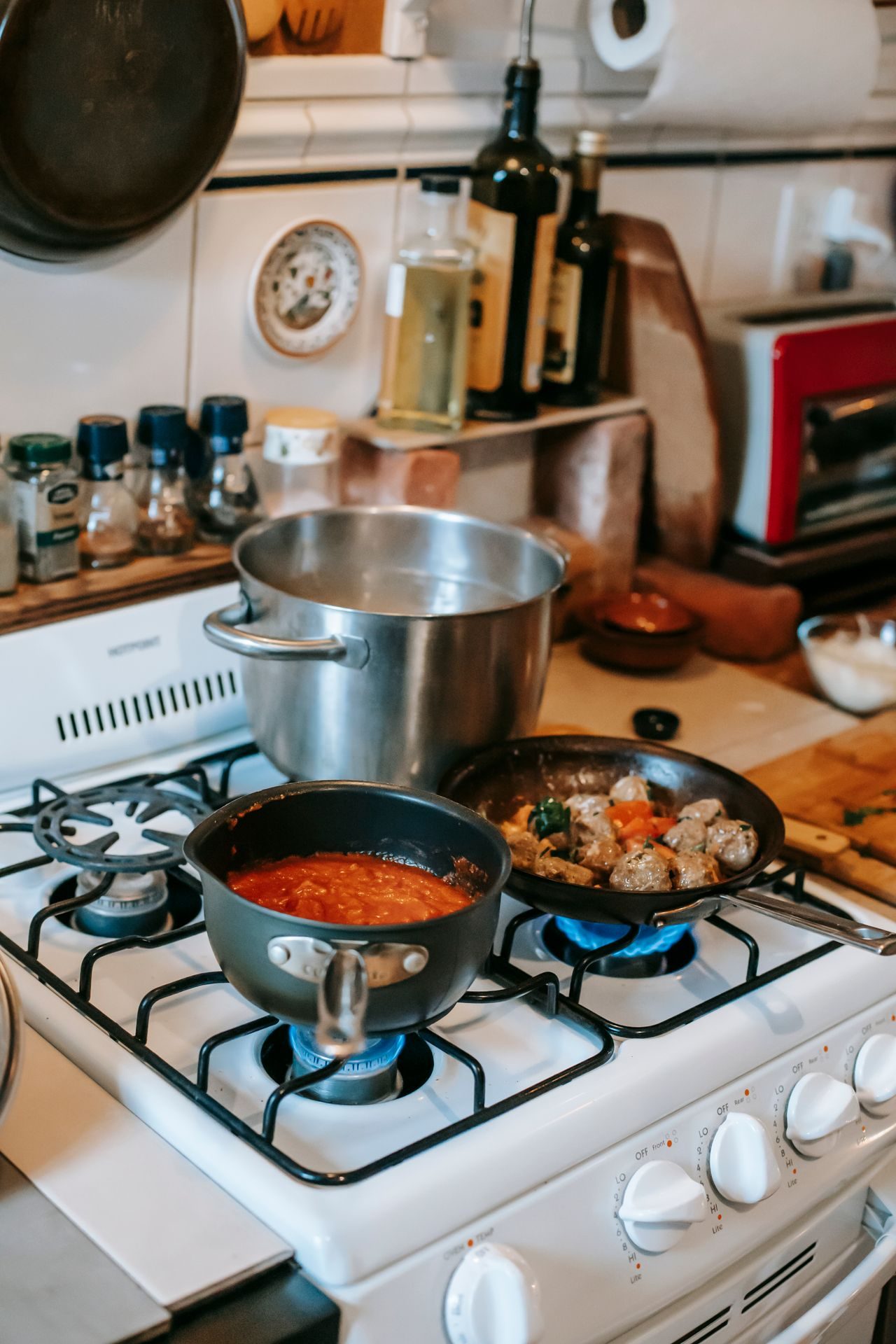
Look at the complete arrangement with neighbouring pans included. A handle should not project into another heated position or create an awkward route for reaching a saucepan behind it. Plan which vessel will occupy each burner before cooking a busy meal. This is easier while the hob is off and the pans are empty than when hot food is already waiting and you need to rearrange the available space.
Separate size from cooking speed
The largest burner is not automatically the right answer to a slow stage in a recipe. First check that the pan, burner and method are compatible. More heat cannot resolve a badly matched vessel or an overfilled pan, and it may conflict with the cookware’s instructions. Use the recipe’s intended technique and the maker’s heating guidance rather than assuming a higher flame always makes a task more efficient.
Prepare ingredients before the cooking stage so that you are not leaving a vessel unattended while searching a cupboard. Keep a suitable utensil and a clear landing place ready. If cooking needs a change in heat, make the adjustment deliberately and observe the food as the recipe directs. Avoid universal claims about an exact knob position, because controls and appliance arrangements differ between kitchens.
Keep the cooker unchanged
Questions about burner operation, an unusual flame or a suspected fault belong with the appliance guidance and an appropriately qualified service professional. Do not attempt to solve them by adjusting jets, bypassing safety parts or modifying a pan support. A cookware article can help organise compatibility information, but it cannot establish that an unidentified appliance fault is harmless or provide permission to keep using an unsafe arrangement.
Keep the model reference accessible if you need advice. Record what you observed without trying to provoke the issue repeatedly. Also check the ordinary cleaning instructions for the supports and surrounding surface when the appliance is safely ready for maintenance. Do not confuse a routine care task described in the manual with a repair. Clear boundaries make it easier to ask the correct question and avoid unnecessary experimentation.
Use a repeatable layout
For meals you cook frequently, establish a simple pan layout with stable positions, comfortable access and clear handle space. Reconsider that layout when adding a larger pot or using a different pan. What works for two small vessels may not fit a stockpot and a broad sauté pan together. Treat the whole cooking surface as a workspace rather than assessing each burner in isolation from everything around it.
Review the maker’s cookware instructions alongside your hob manual for the relevant details. A suitable gas-hob setup does not depend on the most dramatic flame or the widest possible pan. It combines a documented fit, sensible burner selection and a handling route that stays comfortable throughout the meal, from the first ingredient to the moment the cookware is removed for serving.