Make the base part of preparation
Before placing a pan on a ceramic cooking surface, look at its underside as well as its interior. A pan can be clean where food touches it while carrying residue on the base. Check the appliance instructions for acceptable cookware and surface care. The routine begins before heating, when it is easier to notice a problem and choose a different vessel or clean it appropriately rather than rushing during cooking.
Set the pan on a clear, suitable surface while inspecting it. Do not scrape at an unfamiliar mark with whatever tool happens to be nearby. Identify whether you are dealing with ordinary residue or a damaged surface, and follow the cookware maker’s care method. Keeping bases in the same cleaning routine as interiors helps prevent the underside from becoming an overlooked part of a collection of otherwise well-maintained pans.
Lift rather than drag
When moving cookware, use a lifting movement suited to its weight and the product instructions instead of dragging it across the hob. Prepare the destination first so the movement is short and deliberate. Consider the loaded weight, not just how easily you can move the empty pan. If a vessel is too awkward for comfortable handling, choosing a smaller size may be more practical than trying to slide it into position.
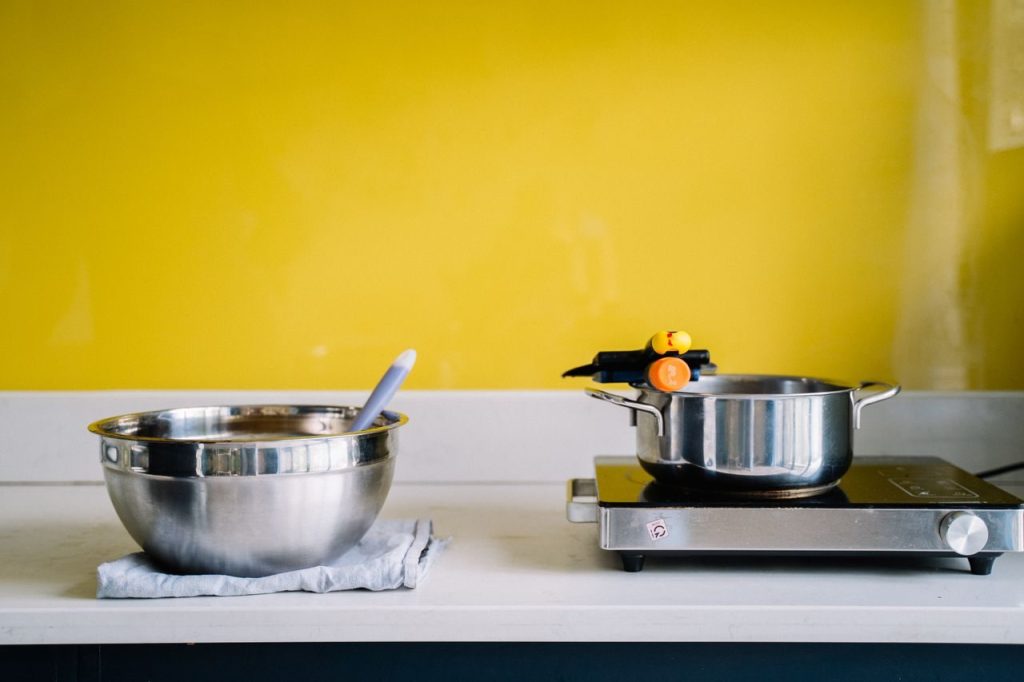
Think about where handles point when several pans share the cooker. Leave enough room to take hold without reaching over a neighbouring vessel. A stable layout reduces the need for last-minute rearranging while food is hot. For frequently cooked meals, decide the positions in advance and revise the plan when you add a larger pot. An orderly surface makes careful movements easier to maintain throughout the cooking sequence.
Keep appliance instructions nearby
Ceramic surfaces and appliances have specific cleaning recommendations, including which products or tools may be used and when the surface can be cleaned. Consult the manual for your model instead of applying an internet remedy to every hob. A specialised tool mentioned in one manufacturer’s instructions is not a reason to improvise with an unrelated sharp object or assume every mark responds to the same treatment.
Do not infer that a surface is ready to touch from its appearance alone. Follow the appliance’s indicators and instructions for residual heat and maintenance. Separate the routine cleaning task from any suspected damage or fault. If a mark, crack or unusual condition raises a safety question, ask the appliance manufacturer or appropriate service provider rather than seeking a cosmetic solution that leaves the underlying issue unresolved.

Choose storage that supports clean bases
The cupboard arrangement can affect the next cooking session. Keep pans dry and stored where their undersides are not picking up loose debris or sitting on an unsuitable surface. If nesting cookware, follow the product’s surface-protection advice and keep the stack stable. A pan that must be pulled from beneath several heavy items can encourage hurried movements before it even reaches the cooker, so access matters as well as cleanliness.
Review the pan’s compatibility before replacing a cooker or buying unfamiliar cookware. A heavy or substantial-looking base is not automatically appropriate for every surface and appliance. Product instructions should clarify suitability. Measure the working base rather than assuming the rim diameter tells you how the pan will sit on the zone, and leave room to handle it without squeezing between other vessels already occupying the hob.
Respond to marks methodically
If a new mark appears, note when it was noticed, which vessel was used and what the appliance manual recommends. This is more useful than trying several cleaning products in rapid succession without understanding their suitability. Never mix cleaners to strengthen an effect. Use only the method permitted for the surface and stop to seek advice when the condition does not match a routine cleaning problem described by the maker.
A sustainable care habit is brief and consistent: inspect a suitable base, position the pan carefully, lift it when moving and clean the appliance as its own instructions require. No single habit guarantees an unmarked hob, and a cookware article cannot assess physical damage remotely. The aim is to reduce avoidable rough handling and make problems easier to identify, while keeping use and maintenance within the limits of the equipment you actually own.