Identify the complete assembly
A pan described as oven-safe may be accompanied by a lid or accessory with different instructions. Before cooking, identify every component you intend to place in the oven: body, long handle, helper handle, lid, knob and any removable trim. Find the product references where possible. A mixed set assembled over several years deserves extra attention because similar appearance does not establish shared construction or permitted use.
Read the guidance for the exact item rather than searching only for a material name. A metal body does not tell you the specification of an attached knob or handle, and a replacement part may differ from the original. If a reference is missing or the instructions are ambiguous, ask the maker. Uncertainty should be resolved before cooking, not while a recipe is waiting for the vessel to be transferred.
Keep limits in context
A manufacturer’s oven limit belongs to the product and conditions it describes. Do not transfer that number to another model or assume it covers every oven function. Check whether the instructions distinguish between ordinary oven use and other settings or placements. The appliance manual is relevant too. A statement about one component cannot replace the requirements for the complete vessel or the cooker in which it will be used.
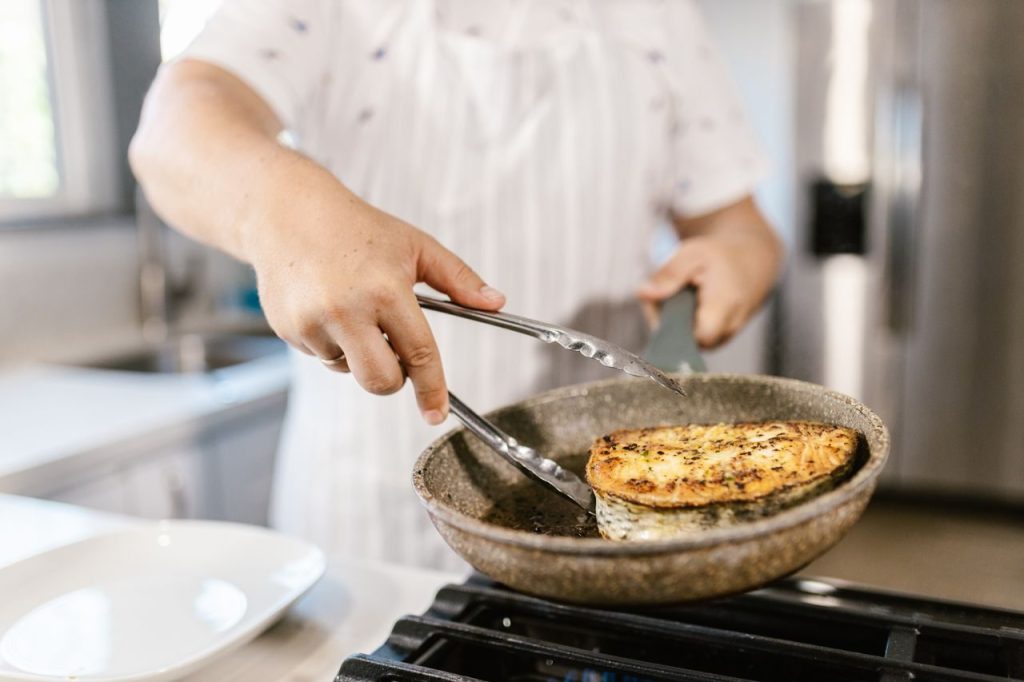
Write the relevant information beside the recipe if this is a meal you make frequently. Keep units clear and avoid relying on memory for a number read months earlier. If the recipe’s method exceeds the documented permission, select suitable cookware or another recipe. The correct response is not to decide that a brief exposure probably does not matter when the manufacturer has not authorised the intended use.
Measure the movement
Check the oven space with shelves in the intended positions and the lid attached. Include room to hold the handles with protective gloves. A vessel that barely fits may be difficult to move safely, even if its body dimensions look compatible on paper. The route through the door and onto the shelf is part of the practical check, not merely a question of where the casserole will sit once placed.
Prepare a stable heat-appropriate landing place nearby. Clear it before starting the recipe so you do not need to negotiate clutter while holding hot cookware. Consider loaded weight and who will do the lifting. If the movement feels impractical, a smaller vessel or a different cooking plan can be the sensible choice. A shared kitchen should not depend on one person being available to rescue an awkward transfer.
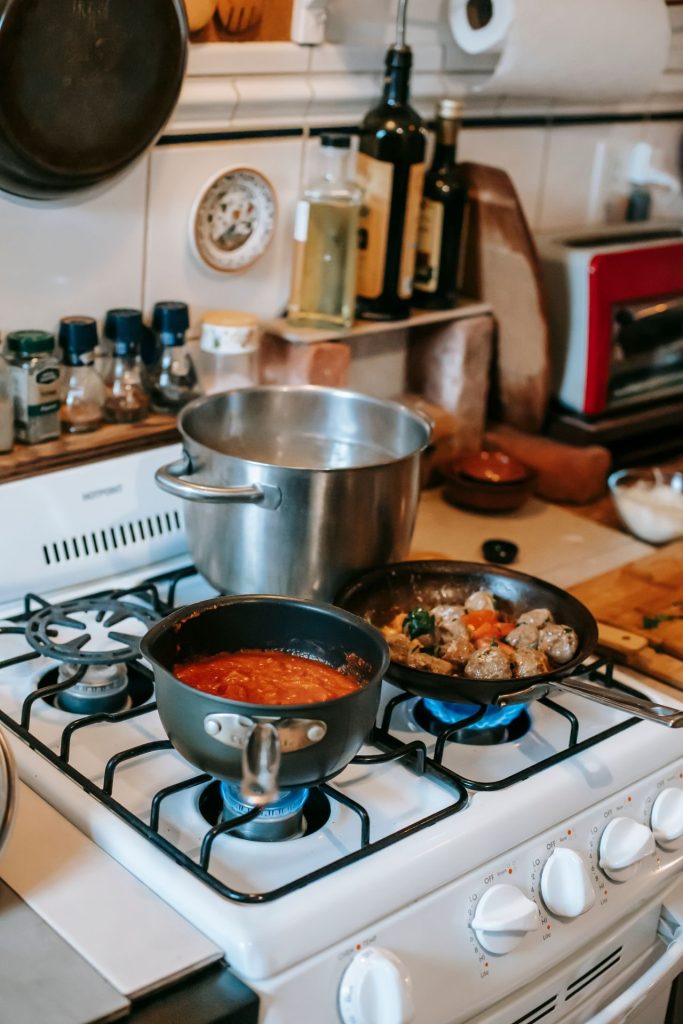
Plan the lid step
Read whether the recipe asks for covered or uncovered oven cooking and when the lid is removed. Have a suitable place ready for it, with attention to its own heat and care requirements. Avoid placing a hot lid where it can be mistaken for a cool everyday object or where its shape makes it unstable. The top accessory needs a handling plan just as the main vessel does.
When a recipe involves checking or stirring, use appropriate protection and follow the method without rushing. Do not assume a handle remains cool after oven use because it behaved differently on the hob. Clear communication also matters when someone else enters the kitchen. Make the hot cookware’s status obvious in ordinary practical ways rather than relying on the next person to remember where each item has been heated.
Return to the care routine
After cooking, follow the manufacturer’s guidance for cooling and cleaning the whole assembly. Keep removable parts together with their references so they are not later mixed into another set without checking compatibility. A lid that happens to fit a rim is not automatically suitable for all the same conditions. If a component is damaged or missing, ask about the correct replacement rather than treating another household lid as an equivalent.
A dependable hob-to-oven routine starts before heating: exact model identified, complete assembly checked, recipe matched and movement planned. This preparation takes less effort than trying to resolve compatibility during a meal. The useful rule is to seek specific permission for the intended setup, not to infer it from a substantial-looking pan or the word oven-safe detached from the component and conditions it was meant to describe.