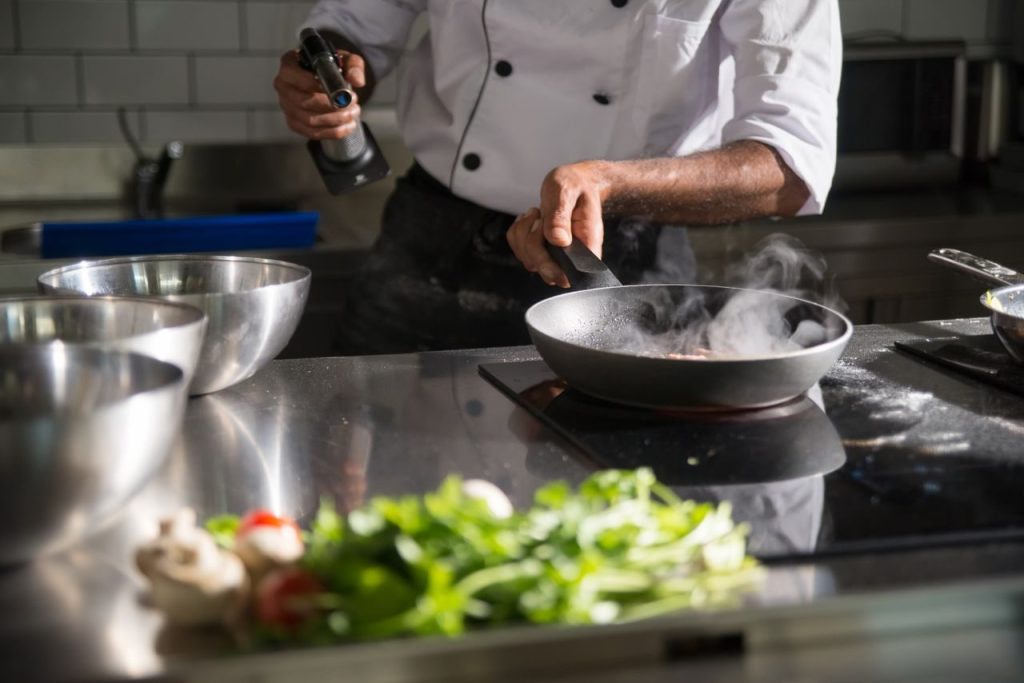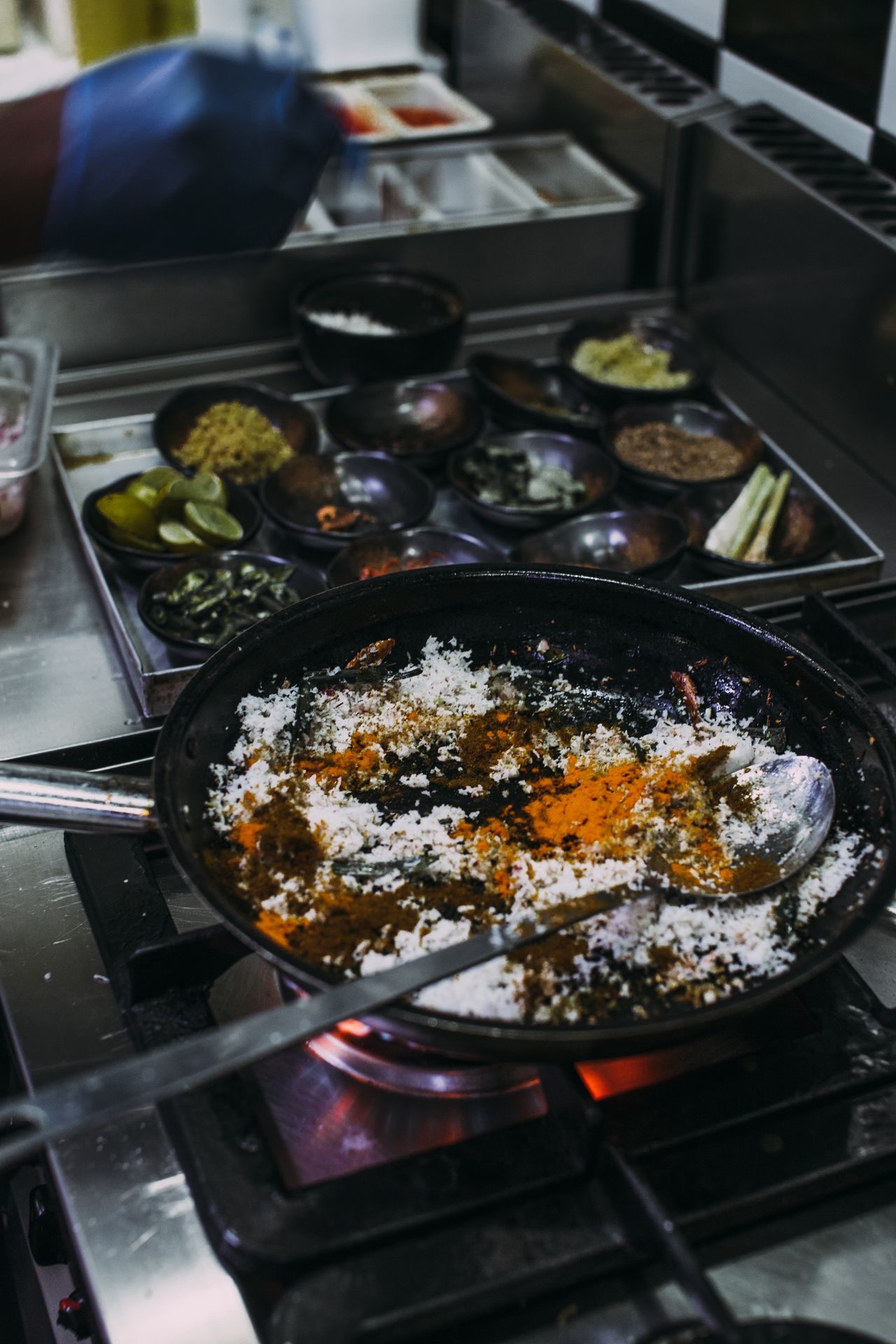
Notice the change in contents
Adding ingredients changes what is in a warm pan, so the next stage should be treated as part of the recipe rather than a repetition of preheating. The ingredients bring their own temperature, quantity and moisture. A pan containing them is a different situation from the moment before they were added. That is why matching a dramatic initial sound is less useful than understanding what the method expects to happen next.
Prepare the ingredients as the recipe specifies and keep relevant food-safety guidance in mind. Do not leave perishable food out for an arbitrary period simply to make it seem less cold. A cookware discussion cannot replace safe storage and preparation requirements. Focus on organisation, suitable quantities and the intended sequence instead of turning a vague instruction about ingredient temperature into a universal rule for every kind of food.
Compare quantity with cooking area
A large quantity in a small flat area can be difficult to arrange and stir as the recipe intends. Look at the working base rather than the rim measurement when assessing space. If the method calls for a single layer, understand that arrangement before adding everything. A broad upper shape does not automatically provide enough contact area for the same amount of food as a vessel with a wider flat base.
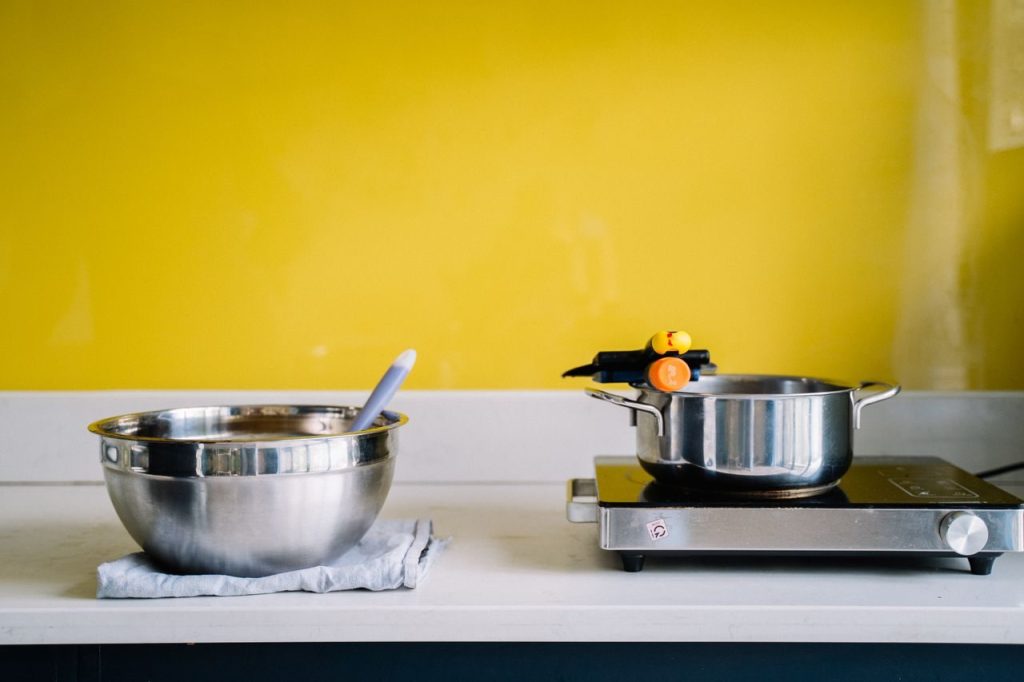
Where the recipe permits cooking in batches, plan the destination for each batch and the later stages before starting. Keep food handling appropriate to the ingredients involved rather than leaving partly cooked portions without a clear method. Alternatively, choose a recipe written for the available pan and quantity. Revising the plan is more dependable than assuming a higher setting can compensate for every crowded arrangement.
Read moisture as part of the method
Ingredients can introduce liquid directly or release it as cooking proceeds. A recipe may want that liquid for a sauce, or it may ask for a different arrangement and cooking stage. Read the method before deciding that moisture in the pan is a failure. The right response depends on the dish, not on a general expectation that all pan cooking should look dry or produce the same surface colour.
Pay attention to the way ingredients are prepared. If the recipe asks for washing, draining or another step, complete it before heating rather than improvising while the food is already in the pan. Do not skip food-safety requirements for the sake of a particular cooking appearance. A well-organised preparation area lets you follow the intended technique without introducing unnecessary pauses or reaching for ingredients that are not ready.
Make deliberate heat adjustments
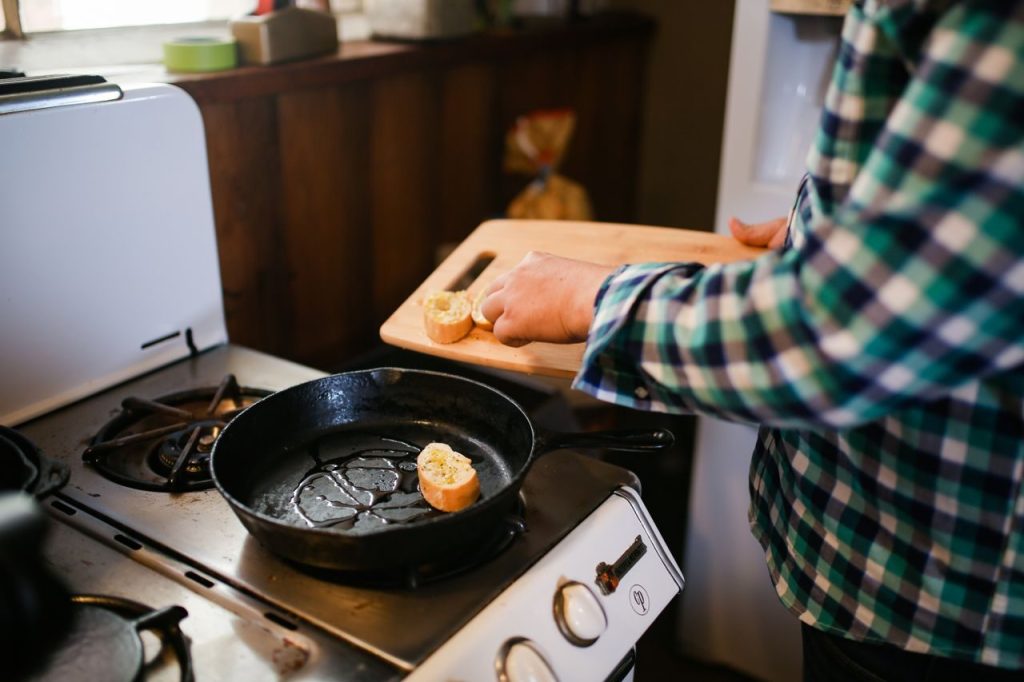
Avoid repeatedly increasing the control whenever the pan looks different after an addition. Follow the recipe’s sequence and the cookware maker’s permitted heat guidance. The appliance setting is a control, not a direct reading of the food’s condition. Observe the intended stage and make changes deliberately. If the vessel or surface does not permit a method, choose another appropriate tool rather than forcing the recipe through a restriction.
Keep the cooking process attended and have utensils ready. A sudden change in sound or appearance may prompt you to look more closely, but it is not a complete measure of doneness or safety. Use the recipe and appropriate checks for the ingredients. Do not let a desire to restore an initial sizzle replace attention to whether the food is cooking through or the method is proceeding as intended.
Learn from a specific meal
If a repeated dish is awkward, note the pan, ingredient quantity, preparation and sequence. A useful note might say that the ingredients were crowded or that a sauce was not ready when needed. Avoid turning one result into a universal claim about cookware materials. You are looking for an adjustment that fits your own recipe and equipment, not evidence that every cold ingredient or every pan behaves in exactly the same way.
For the next attempt, change one practical part of the plan while respecting the recipe and equipment instructions. That might mean using an appropriate larger vessel, selecting a smaller recipe quantity or preparing additions earlier. A calmer sequence often offers more clarity than chasing an exact sound or fixed preheating duration. The aim is manageable cooking with suitable checks, not preserving the appearance of an empty pan after it has become part of a meal.