Adding cold ingredients to a heated pan changes the surface temperature immediately, and the speed of recovery depends on the material’s thermal properties rather than marketing claims. Everyday cooking often involves this sequence: heating oil, adding protein, then introducing vegetables or liquid. Materials differ in how much stored heat they lose and how quickly the hob can restore the original temperature.
Manufacturers state maximum hob settings and oven temperature limits in their care instructions, and these should be followed to avoid warping or coating damage. The following sections compare common materials on heat retention, response time and compatibility with typical hob-to-oven steps.
Heat capacity and everyday portion sizes
Thicker bases hold more heat per unit area. When 200 g of chilled meat or vegetables enters the pan, a heavier base loses fewer degrees than a thin one before the hob begins to compensate. This difference appears most clearly when cooking two or three portions rather than a single small serving.
Stainless steel with a thick aluminium or copper core stores moderate heat and releases it steadily. Solid aluminium transfers heat faster but holds less total energy, so the temperature drop is larger yet brief. Cast iron stores the largest amount and therefore shows the smallest immediate drop, though it takes longer to reach the starting temperature in the first place.
Recovery after adding liquid or cold items
Recipes that require deglazing or adding stock test recovery speed. A pan that returns to a gentle simmer within 30–60 seconds keeps the cooking process continuous. Materials with high conductivity move heat from the base edges inward more quickly once the hob resumes output.
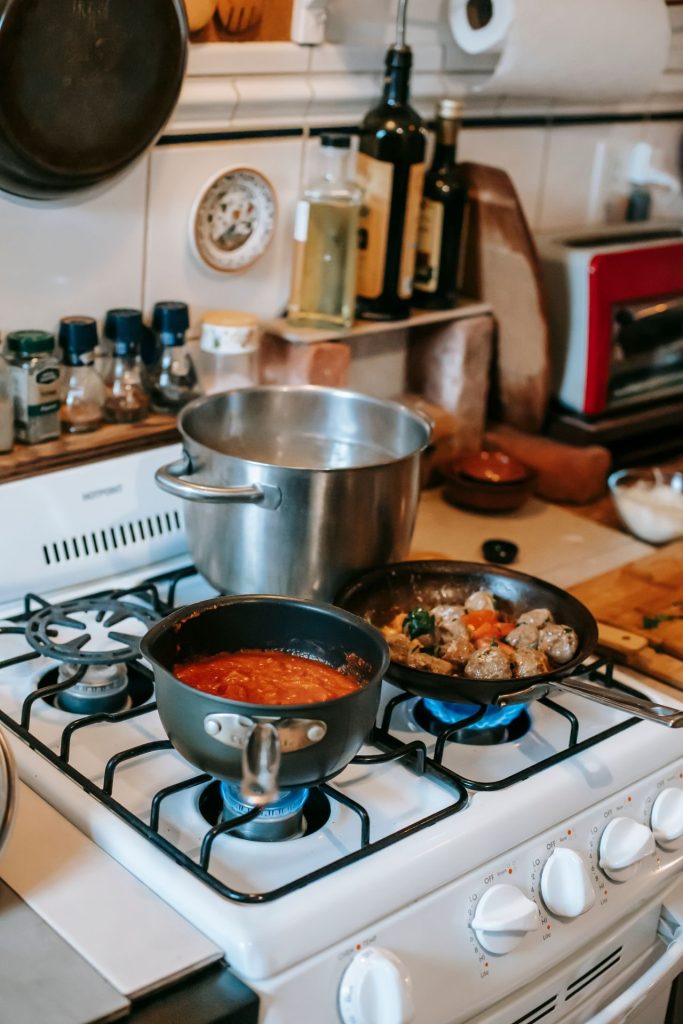
Disc-base pans concentrate the conductive layer only under the flat contact area. When liquid spreads across a larger diameter, the outer zone relies on the steel wall to conduct heat, slowing recovery compared with fully clad construction. Manufacturer guidance for induction and ceramic hobs often notes the minimum base diameter required for stable performance.
Response to hob power changes
Gas and electric hobs allow immediate adjustment, while induction responds to the pan’s magnetic properties. Aluminium requires a compatible base layer on induction; without it the hob may cycle on and off rather than maintain a set level. Cast iron retains heat so effectively that lowering the setting does not produce an instant surface-temperature change, which can lead to continued simmering when a rapid reduction is intended.
Users can judge response by watching the surface of oil or butter after a power change. A visible lag of more than a few seconds indicates the material is still releasing stored heat. This observation helps match pan choice to recipes that need quick shifts between sear and simmer.
Oven transfer and lid considerations
Many everyday dishes move from hob to oven for finishing. The material must tolerate the oven temperature stated in the care instructions, and the lid must match. Glass lids are usually limited to lower oven settings than metal lids; exceeding the limit risks cracking from thermal shock.
Cast iron and carbon steel can usually move between hob and oven without issue up to the manufacturer’s maximum, provided the handle is also rated. Stainless steel with riveted handles follows the same rule. Non-stick coatings carry separate temperature ceilings, often lower than the metal itself, to prevent coating degradation.
Acidic ingredients and surface interaction
Tomato-based sauces, vinegar reductions and citrus finishes are common in weeknight cooking. Uncoated aluminium and carbon steel can react with these foods, producing metallic flavours and surface discolouration. Stainless steel and enamelled cast iron resist such reactions within normal cooking times.
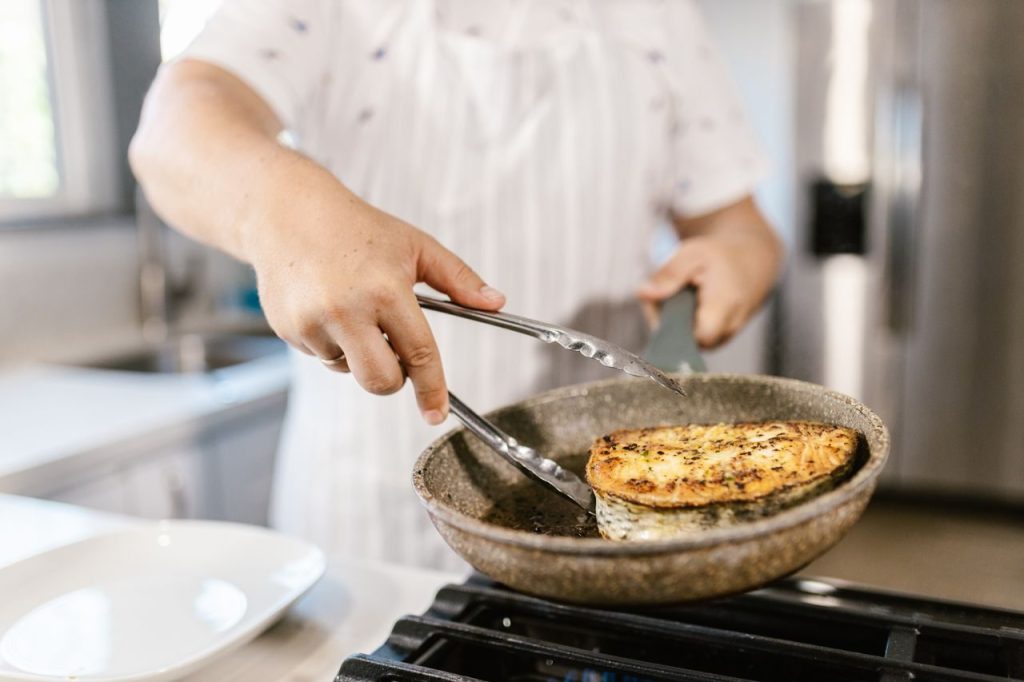
Manufacturer instructions for non-stick surfaces advise against prolonged contact with acidic mixtures at high heat, as this accelerates coating wear. When a recipe requires both searing and later addition of acid, a stainless or enamelled vessel avoids the need to transfer contents mid-process.
Practical limits on repeated heating cycles
Daily use involves multiple heat-up and cool-down cycles. Warping occurs when a thin base expands unevenly; thicker clad or cast constructions resist this better. Appliance manuals for ceramic hobs warn against sliding heavy pans, as the material can scratch the surface regardless of the pan’s composition.
Repeated overheating of non-stick coatings beyond recommended temperatures reduces release properties over time. Stainless and cast-iron surfaces do not degrade in the same way but can develop seasoning or discolouration that affects appearance rather than function.
Matching material to typical hob zones
Smaller electric or induction zones deliver heat to a limited area. A pan whose base exceeds the zone diameter relies on lateral conduction within the material. High-conductivity options such as copper or aluminium cores spread heat more evenly across the cooking surface than thick stainless alone.
Gas burners produce a ring of flame. Materials with lower conductivity show hotter rings directly above the flame and cooler centres until heat equalises. Checking the base diameter against the burner size before purchase prevents persistent hot spots during routine frying or sauce reduction.
Selecting a material therefore starts with the most frequent cooking sequence—how often cold ingredients are added, whether acid is introduced later, and whether the pan must move to the oven. Manufacturer care instructions supply the temperature and hob compatibility boundaries for each option, allowing direct comparison without reference to price or appearance.