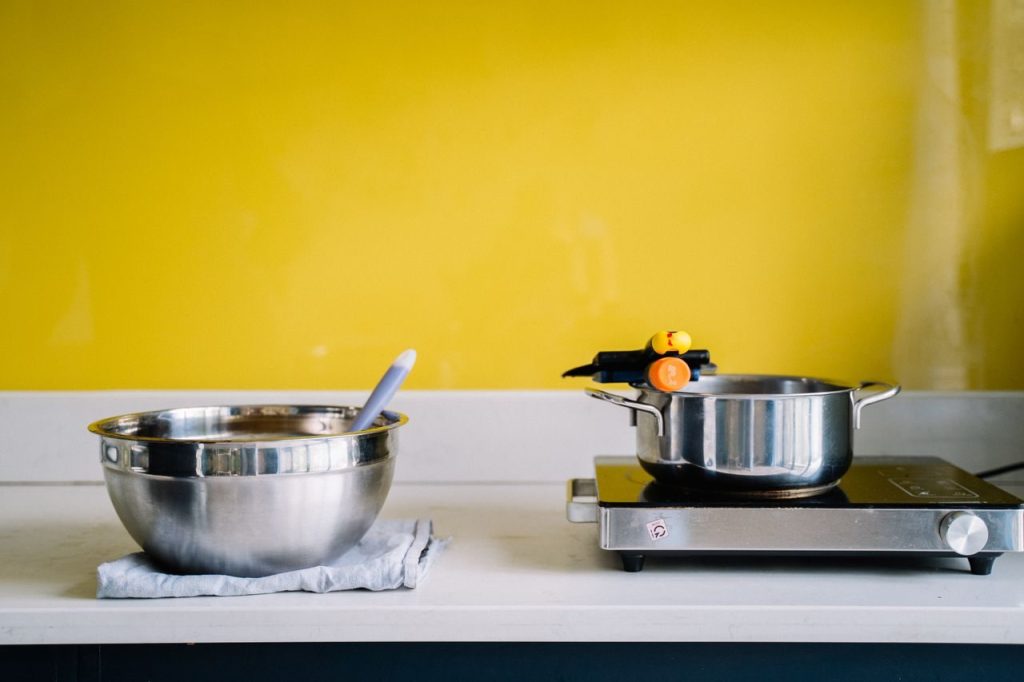
Start with the food arrangement
A frying pan and a sauté pan can share a similar rim diameter while offering different working spaces. Instead of choosing by name alone, imagine a meal laid out inside each vessel. Do the ingredients need a single layer, frequent stirring or room for a sauce? The answer gives you a practical starting point before you compare finishes, handles or the number of pieces in a set.
Sloping sides and straighter sides change the way you reach the food and use the space. Inspect the flat base measurement rather than relying only on the advertised rim diameter. Draw the dimensions on paper and compare them with your current pan. A familiar dinner is a more useful scale reference than a product photograph containing a carefully arranged portion with no clear indication of quantity.
Consider your usual movements
Think about the utensils you use and the way you serve. If you often slide food towards a plate, the side profile deserves attention. If you stir a mixture containing liquid, consider depth and the room above the ingredients. Neither shape excuses overfilling. Look at how the recipe proceeds and leave adequate space for the movements it requires, rather than treating stated capacity as a target to fill.

Do not assume you need to toss a pan to use it properly. Stirring with a suitable utensil may fit your kitchen and comfort better. Assess how the loaded vessel will be supported and whether you can reach its contents without an awkward wrist position. The useful comparison is the work you will actually do, not the movements shown in a short professional cooking video.
Check liquid and lid requirements
A recipe that starts by frying and finishes with a sauce may lead you to consider a deeper vessel. Check the intended method before shopping, including whether a lid is required. A lid sold separately needs confirmed compatibility, not merely a matching number on the packaging. Ask the maker which item fits if the rim shape or measurement is unclear, especially when replacing an older accessory.
If your meals rarely require covered cooking, a lid may be less important than handling and flat cooking area. Avoid paying for a bundle simply because it includes more components. Consider where the lid will be put during cooking and where it will be stored afterwards. A supposedly complete set can create more daily work when accessories have no clear role or stable place in a small kitchen.
Measure the whole vessel
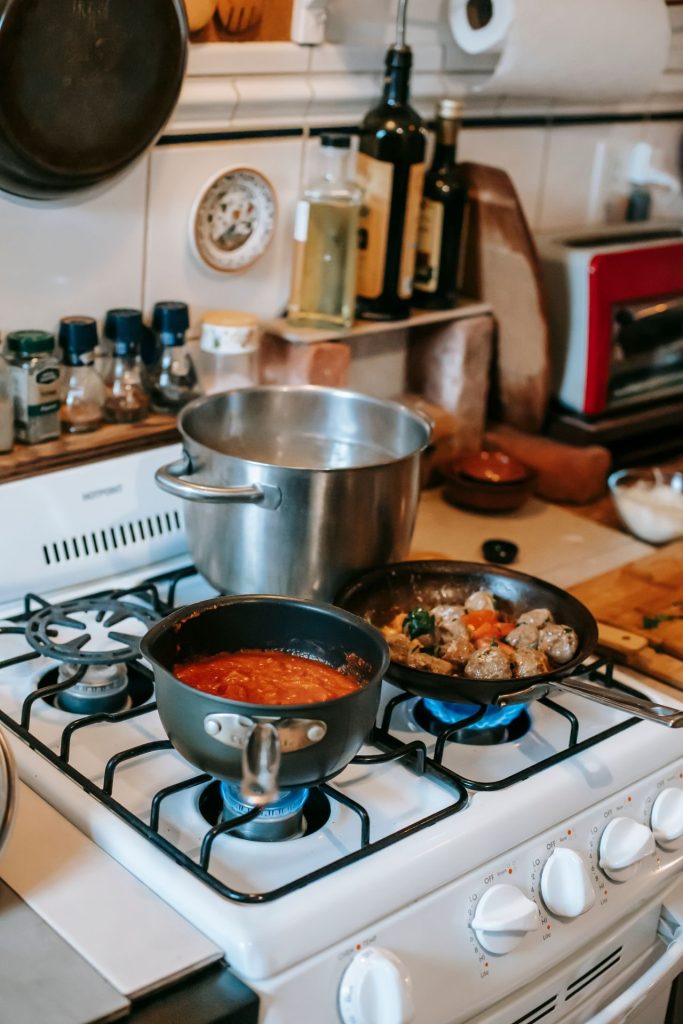
Compare the footprint on your cooker, including handles and neighbouring pans. A broad pan with a long handle may leave little space for another saucepan even if its base suits one cooking zone. Confirm hob compatibility in the product instructions. If oven use is part of your plan, check the body, handle and any lid separately rather than inferring permission from the material or appearance.
Washing and storage need the same attention. Measure the sink and the cupboard opening, not just the available shelf depth. Think about lifting the pan out without moving a heavy stack first. A useful everyday vessel is convenient at the beginning and end of cooking as well as on the hob, and those practical movements often distinguish two otherwise similar candidates more clearly than a marketing description.
Choose one clear improvement
Write a sentence describing what your current pan cannot do comfortably. Perhaps its flat area is too small, the sides make stirring awkward or it lacks a suitable lid. Compare each candidate with that specific need. If both shapes would work, choose the one that fits your handling, washing and storage routine rather than assuming one category is inherently more advanced or versatile for everyone.
There is no obligation to buy both types immediately. Start with the vessel that solves a regular problem and use your existing cookware for other jobs. A collection becomes useful through complementary tasks, not a complete list of shapes. The right choice for a crowded weekday kitchen may differ from the choice for occasional elaborate meals, and understanding that difference is more valuable than a universal winner.