Cookware materials differ in density and specific heat capacity, so they take different amounts of time and energy to reach a usable temperature for everyday portions. These differences matter when a cook needs to start a sauce or fry a few vegetables without waiting longer than necessary or using more hob power than the task requires.
Stainless steel, cast iron, aluminium and copper each conduct and store heat according to measurable physical properties listed in manufacturer specifications and material data sheets. Understanding those properties helps match a pan to the frequency and size of meals prepared on a typical household hob.
Defining density and heat capacity for cookware
Density describes the mass contained in a given volume of material. A thicker cast-iron pan therefore contains more mass than a stainless-steel pan of identical external dimensions. Specific heat capacity describes how much energy is required to raise the temperature of that mass by one degree. Materials with higher values need more energy input before the cooking surface becomes hot enough for searing or simmering.
Manufacturer care instructions for cast-iron items routinely note the longer pre-heating period required compared with thinner clad pans. Appliance manuals for induction and ceramic hobs list power settings that assume average pan mass; heavier pans may need an extra increment of power or an extra minute before ingredients are added.
Stainless steel in daily use
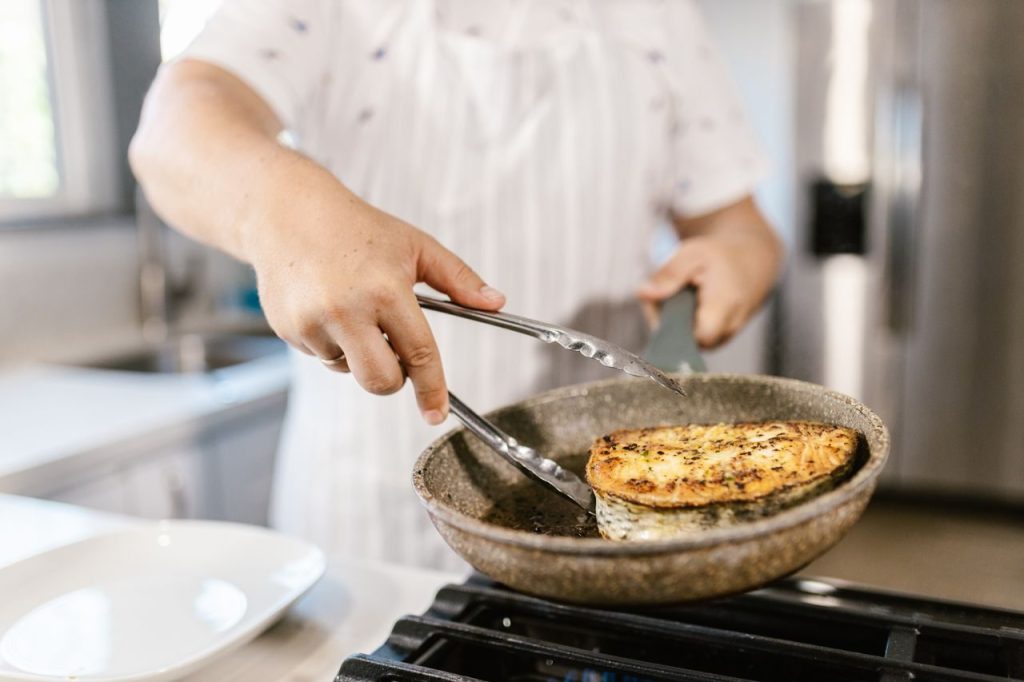
Stainless steel has moderate density and relatively low specific heat capacity. A typical 18/10 stainless pan therefore reaches frying temperature faster than cast iron of similar diameter once the hob is switched on. The same property means the pan cools more quickly when removed from the heat, which can be useful when a recipe calls for stopping the cooking process promptly.
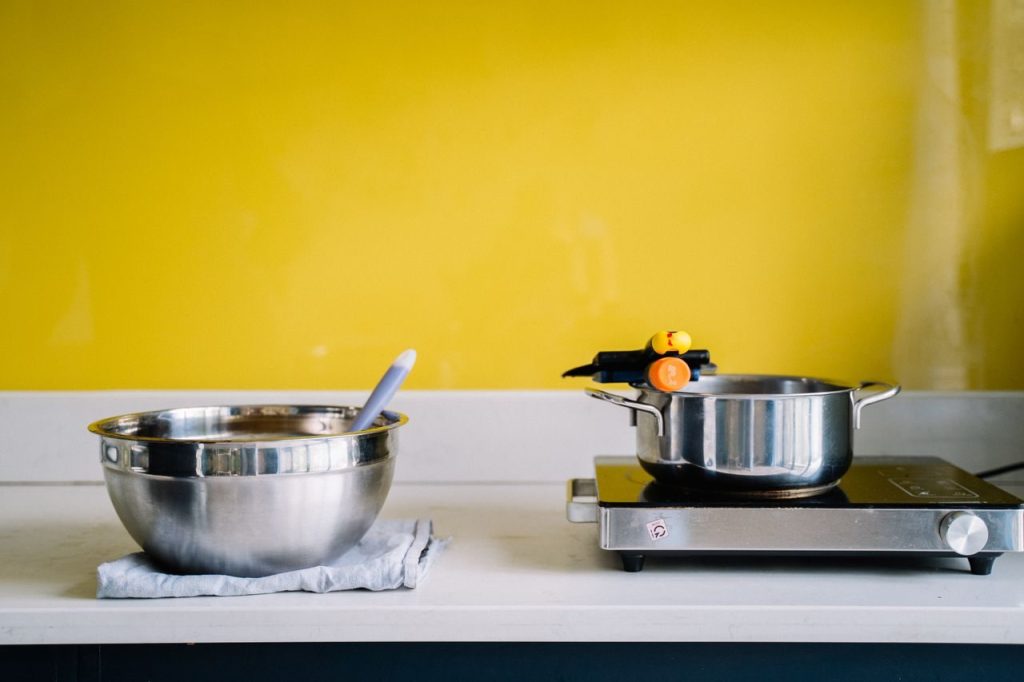
Food-safety guidance on cooling cooked food recommends transferring contents to shallower containers once the temperature falls below 60 °C. Stainless steel’s faster heat loss assists this step without additional equipment.
Cast iron and sustained heat
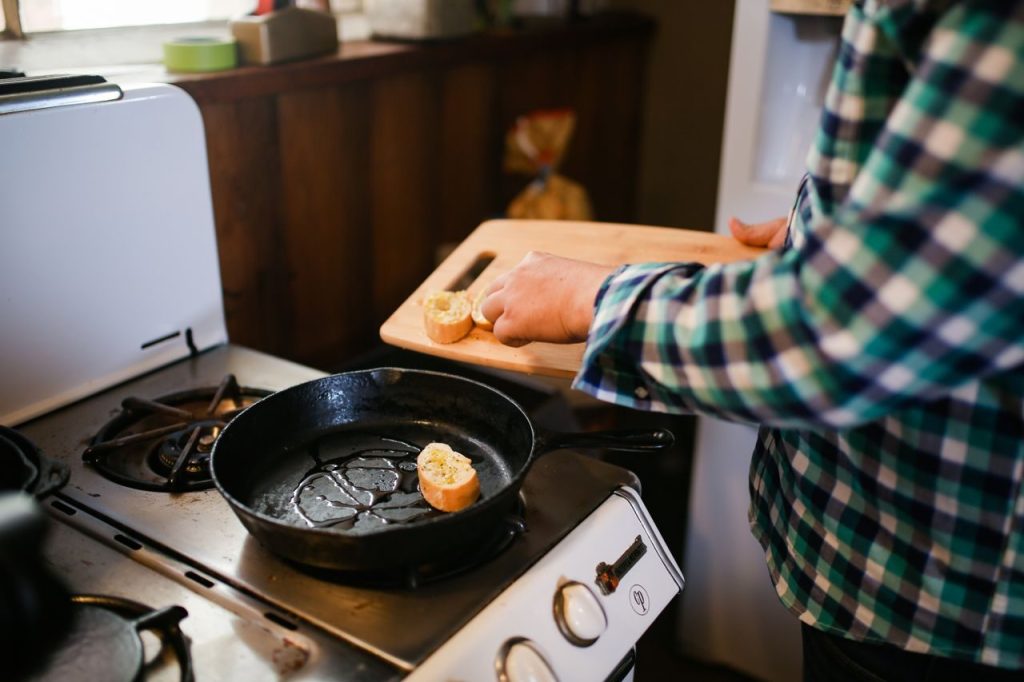
Cast iron possesses high density and high specific heat capacity. These characteristics produce a longer heat-up phase but also greater thermal mass once temperature is reached. For tasks that involve keeping a steady temperature while ingredients are added in stages, the material’s stored heat offsets the cooling effect of cold food entering the pan.
Manufacturer instructions for cast-iron skillets advise gradual heating on medium settings to avoid thermal shock. The same density that lengthens warm-up also extends the time the pan remains above safe holding temperatures after the hob is turned off, a factor noted in oven-to-table guidance supplied with enamelled pieces.
Aluminium and copper layers
Aluminium offers low density and high thermal conductivity. When used as a core or disc bonded to stainless steel, it reduces overall heat-up time while the outer layers provide durability. Copper exhibits even higher conductivity but is seldom used alone in modern domestic pans because of cost and reactivity considerations documented in material safety data.
Appliance manuals for induction hobs state that aluminium and copper bases must contain a ferromagnetic layer to function. Without it the hob will not engage, regardless of how quickly the material would otherwise conduct heat.
Matching material to portion size
Smaller everyday portions lose heat faster relative to their volume. A low-density aluminium pan can be brought to temperature quickly for a single egg or small vegetable sauté, then removed from the hob before residual heat overcooks the food. Larger cast-iron pieces suit batches where sustained heat is needed after the hob is switched off, such as resting a sauce while other meal components are finished.
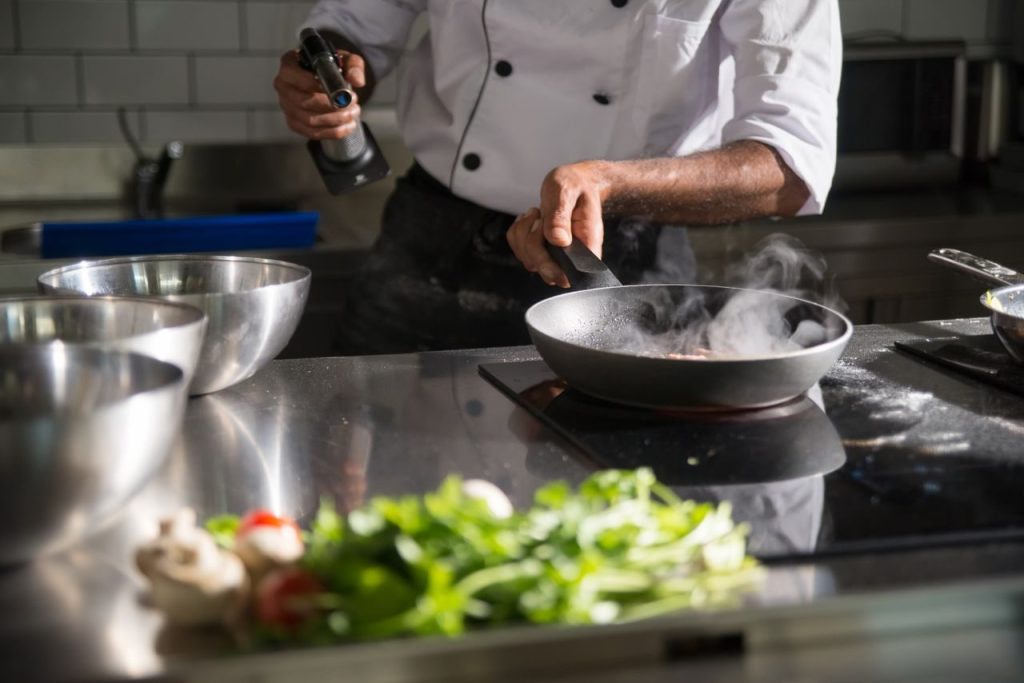
Recipes that specify exact hob times assume average pan mass. When a heavier pan is substituted, the time between switching the hob on and reaching the required surface temperature increases; adjusting the initial power setting compensates without exceeding the material’s recommended limits.
Storage and repeated daily cycles
Repeated heating and cooling cycles affect all materials, but the rate of temperature change is greater in low-mass pans. Manufacturer guidance for stainless-steel items permits dishwasher cleaning provided the base remains flat; repeated thermal shock from cold water on a hot pan is listed as a possible cause of warping in care booklets.
Cast-iron pieces require drying immediately after washing to prevent moisture retention within the dense material. These steps are stated in the care instructions supplied with the product and do not vary by brand once the material is identified.
Practical limits set by hob type
Induction hobs deliver energy directly to the base, so heat-up time depends almost entirely on the pan’s mass and specific heat. Ceramic hobs heat the glass surface first, adding an intermediate layer that slows transfer to high-mass pans. Gas burners allow visual adjustment of flame height to match pan diameter, reducing wasted energy around the edges of smaller pieces.
Appliance manuals advise against using pans whose base diameter exceeds the marked cooking zone, because heat outside the zone does not contribute to the cooking process and may damage surrounding surfaces over time.
Selecting cookware according to measured density and heat capacity therefore aligns the time and energy required with the size and frequency of everyday tasks while remaining within the operating parameters stated by both cookware and appliance manufacturers.