Induction hobs register the base of a pan through magnetic fields, so any change in the amount of food or liquid inside alters how quickly the surface temperature rises or falls. Users often notice that settings which worked for one stage of a recipe produce different results once ingredients are added or reduced. Understanding these shifts helps maintain steady conditions without constant monitoring.
Compatibility starts with confirming that the pan base contains ferrous metal and sits flat on the cooking zone. Once that is established, the next step is learning how the hob’s power increments translate into actual heat at the base when the pan holds varying volumes of liquid or solids.
Reading the control increments on typical induction models
Most induction hobs offer numbered levels from one to nine, sometimes with an additional boost function. These numbers do not correspond to fixed wattage across every model; they represent proportional output within the hob’s maximum rating. A level five on one unit may deliver noticeably more energy than level five on another, especially when the pan base only partially covers the zone.
Manufacturers usually list the approximate power for each setting in the manual. Checking these figures before first use prevents surprises when scaling a recipe up or down. The listed values assume a full-size pan centred on the zone; smaller bases or off-centre placement reduce effective transfer even if the display shows the same number.
Responding to added ingredients mid-cook
When cold stock or vegetables enter a hot pan, the surface temperature drops immediately. On induction the hob sensor detects the change and may increase output automatically on some models, while others hold the set level until manually adjusted. Observing the first minute after addition shows whether the chosen setting recovers quickly enough to avoid prolonged simmering below target.
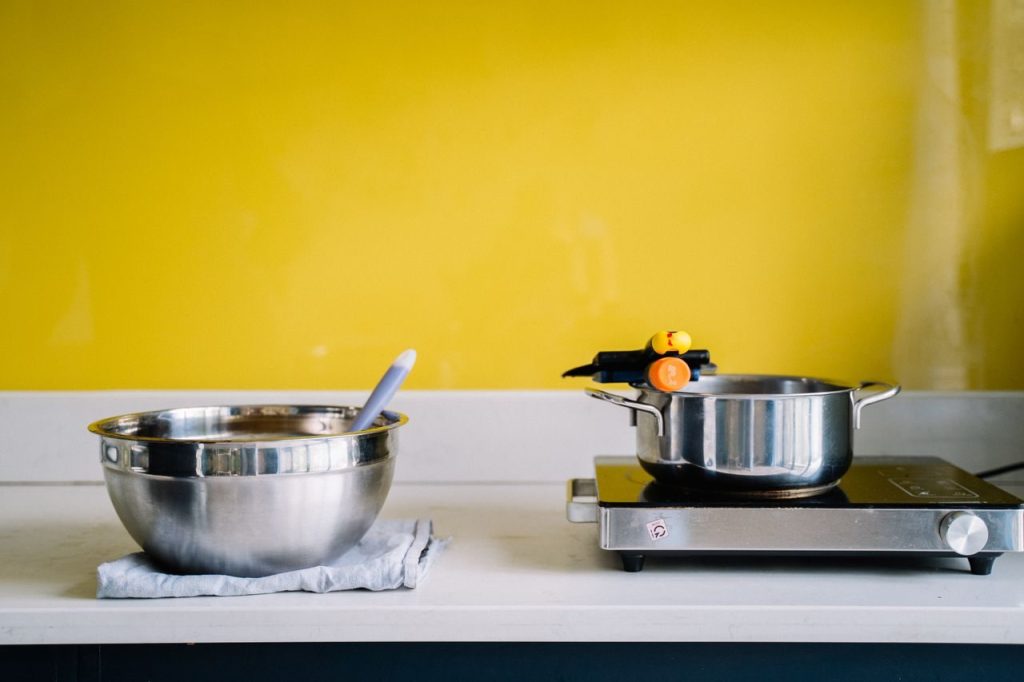
A practical approach is to raise the level by one or two increments just before adding larger quantities, then return to the original setting once the contents reach the desired range. This pre-adjustment compensates for the thermal mass of the new material without overshooting once equilibrium returns.
Distinguishing simmer from boil on digital displays
Induction hobs lack a visible flame, so the only reliable indicators are the gentle movement of small bubbles at the edge of the liquid and the sound of occasional larger bubbles rising. Level two or three often produces a steady simmer once the pan and contents have stabilised, but the exact number depends on the total volume and the pan’s base thickness.
Users can test by bringing a measured amount of water to a visible simmer, noting the level, then repeating with an additional 200 ml. The difference in required setting illustrates how volume affects the chosen output. Recording these observations for frequently used pans removes guesswork on subsequent occasions.
Using the boost function without exceeding safe limits
The boost setting delivers maximum power for a limited period, usually ten minutes. It suits bringing large volumes to temperature quickly but can cause rapid reduction if left engaged once the contents are hot. Switching back to a numbered level immediately after the initial rise prevents scorching at the base.
Some models allow boost on one zone only while others permit it on two. Checking the manual clarifies whether simultaneous boost on adjacent zones affects overall circuit loading, an important detail in kitchens with older wiring.
Accounting for pan material thickness during adjustments
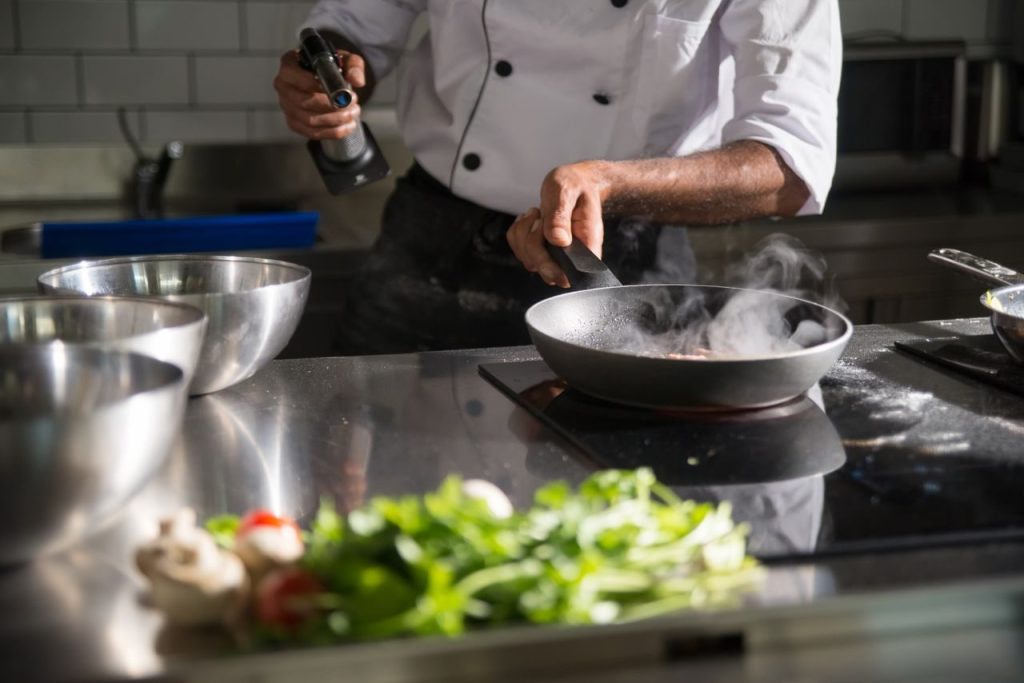
Thicker bases retain heat longer after the hob is lowered or switched off. When moving from a high setting used for searing to a lower setting for simmering, the residual heat in the base continues to affect the contents for several minutes. Reducing the level earlier than intuition suggests compensates for this carry-over.
Conversely, thin disc-base pans lose heat faster once output drops, so the same reduction may require a slightly higher final setting to maintain the same liquid temperature. Matching the adjustment timing to the known behaviour of each pan avoids under- or over-cooking.
Verifying even coverage across the cooking zone
Induction zones vary in diameter. Using a pan whose base falls short of the marked zone boundary concentrates energy in a smaller area, raising the risk of hot spots at the centre. Keeping the base fully within the marked area distributes the magnetic field more evenly and allows the hob’s sensors to read temperature across a larger portion of the base.
When a recipe calls for frequent stirring, a slightly larger base also provides more surface area for heat to spread before the next addition of ingredients, reducing the chance of localised overheating.
Returning to a previous setting after an interruption
If cooking is paused to attend to another task, the hob may retain the last displayed level or revert to standby depending on the model. Restarting at the recorded level and then observing bubble activity for thirty seconds shows whether the contents have cooled enough to need a temporary increase. This short observation period prevents both under-heating and unnecessary energy use.
Consistent note-taking of effective levels for common volumes and pan types builds a personal reference that speeds up daily decisions without repeated trial and error.