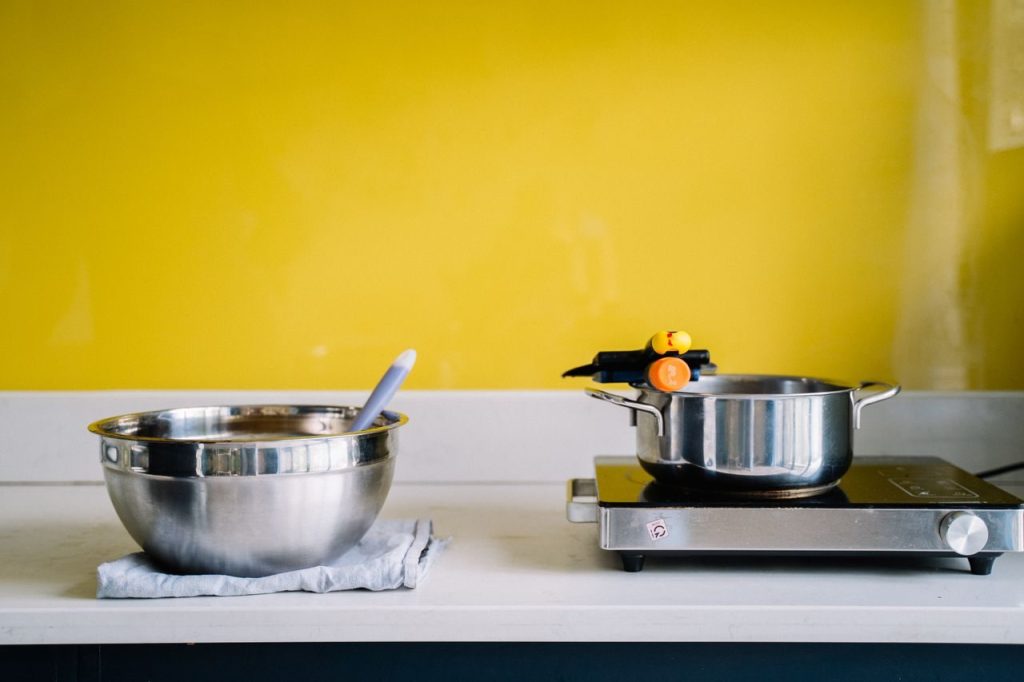
Induction hobs deliver energy directly to the pan base, so the thickness, layering and diameter of that base determine how quickly heat appears and how evenly it spreads. Users often find that the same numerical setting produces different results when they move from a single-layer stainless pan to a multi-ply or encapsulated-base model. Understanding the interaction between these variables removes guesswork and reduces the need to adjust midway through a recipe.
The key is to observe the first two minutes after the hob is switched on. A thin single-layer base will show small bubbles forming near the edges first, while a thicker encapsulated base warms more uniformly. Once the pattern is recognised, the initial power level can be chosen with greater accuracy for the remainder of the cooking session.
Reading the base construction before choosing a setting
Manufacturer markings on the base usually indicate whether the pan contains an aluminium or copper core. These cores increase the mass that must be heated, so the same hob zone requires a higher starting percentage on the control dial than it would for a plain stainless disc. The difference is most noticeable when bringing liquids from cold to a simmer.
Flatness also matters. A base that rocks slightly on a flat work surface will leave an air gap on the hob glass. The sensor in the hob detects less efficient coupling and the displayed power level no longer matches the actual energy transferred. Running a straight edge across the base before first use reveals any distortion that will affect later heat-up behaviour.
Starting percentages for common base types
Most induction hobs label their controls from 1 to 9 or in 100-watt increments. A useful reference point for a 20 cm encapsulated stainless pan is to begin at level 4 or 5 when heating 500 ml of water. A single-layer pan of the same diameter reaches the same temperature on level 3. These starting figures are then fine-tuned by watching the surface of the liquid rather than the number on the dial.
Cast-iron bases absorb still more energy before the cooking surface rises. On the same hob, level 6 is often required for the first two minutes, after which the setting can drop to 3 to maintain a gentle simmer. The extra initial input compensates for the material’s thermal mass without overshooting once the iron is up to temperature.
Adjusting during the first stage of cooking
When ingredients are added, the temperature at the pan base drops. A multi-layer base recovers faster because the core continues to release stored heat. On an induction hob this recovery appears as a quick return of small bubbles across the whole base. A thinner base shows a longer lag, so the power level may need to rise one step earlier than the recipe suggests.
Stirring frequency also influences the reading. Frequent stirring distributes heat through the food rather than allowing it to concentrate at the base, so the hob sensor receives a different signal. Keeping the same stirring pattern each time makes the chosen power level more repeatable across different meals.
Recognising when the setting is too high
Visible signs include rapid edge browning while the centre remains cooler, or sauce catching in a ring that matches the induction coil size. These patterns indicate that energy is entering faster than the base can spread it. Lowering the level by one step and waiting thirty seconds usually restores even simmering without changing the pan.
Another indicator is the sound of the hob fan. On many models the cooling fan speeds up when the electronics detect sustained high output. If the fan remains at high speed after the first two minutes, the selected level is likely higher than the pan base requires for the quantity of food present.

Switching between hob zones of different sizes
Smaller zones have lower maximum output. Moving a 24 cm pan from a large zone to a small one without changing the percentage can leave the contents under-heated. The practical correction is to raise the percentage by one step on the smaller zone, then monitor the first minute of heating to confirm the rate matches the original zone.
Larger zones allow the same pan to run at a lower percentage. This is useful when reducing sauces, because the gentler energy input reduces the chance of local overheating at the base edges.
Recording observations for repeated meals
After three or four uses of the same pan and hob combination, a short note of the starting level, time to first simmer and any mid-cook adjustment produces a reliable reference. The note travels with the pan rather than the hob, because different induction models vary in their coil response even at identical displayed percentages.
These records remain useful when a new pan is added to the collection. Comparing the base thickness and diameter against an existing note gives an immediate estimate of the power level needed, shortening the trial period for the new piece.
Consistent results on induction therefore come from matching the chosen power level to the actual mass and contact area of each pan base rather than relying on the number alone. Once the pattern for each combination is established, day-to-day heat control becomes predictable without repeated mid-recipe corrections.