Separate the breakfast jobs
A breakfast containing eggs, toast and a warm side is a small menu rather than a single task. List how each component will be prepared and which appliance or vessel it needs. A familiar breakfast can still become hurried when several steps finish together and there is nowhere to plate them. Planning the jobs first is more useful than buying a pan advertised as suitable for every possible morning meal.
Choose complete cooking instructions for the foods involved, especially when eggs or other ingredients have particular safety requirements. Household needs may differ, so use appropriate authoritative guidance where necessary rather than assuming a visual preference applies to everyone. The cookware decision should support that preparation, not replace it. An attractive browned surface or a neatly arranged plate does not by itself establish that every component has been handled and cooked appropriately.
Choose the pan for its main task
If eggs are the pan’s primary job, compare the working area, side shape and utensil access for the recipe you use. If it mainly warms a prepared vegetable side, another arrangement may be appropriate. Identify the surface and read its care and heating instructions. A pan suitable for one breakfast technique should not automatically receive a different high-heat method simply because both meals are eaten in the morning.
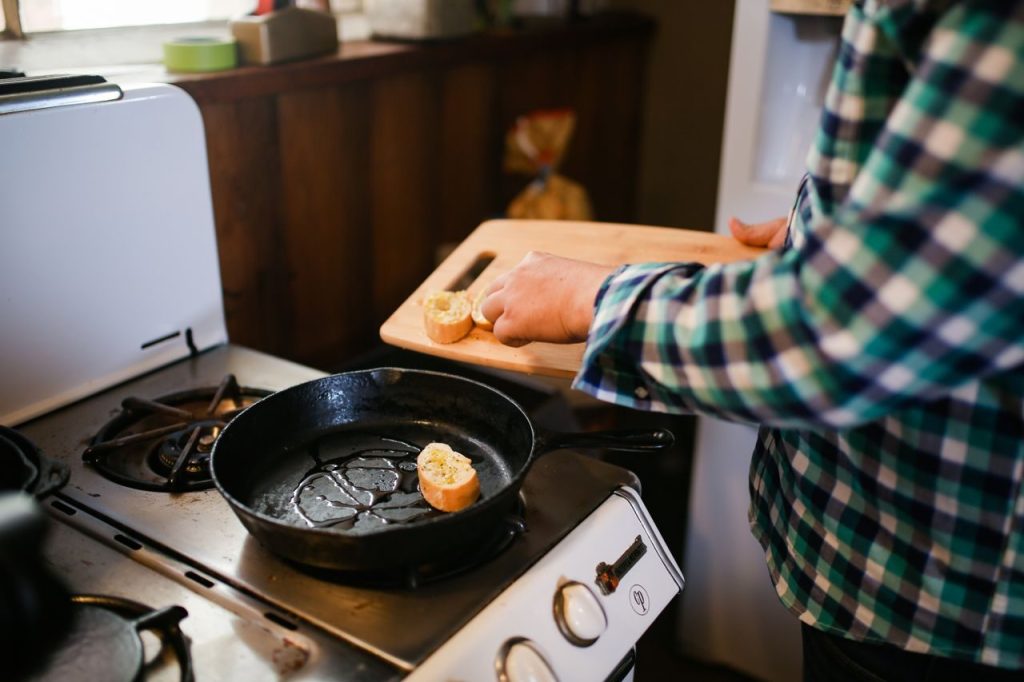
Consider portion size honestly. A small pan may be convenient for one person but crowded for several portions. A very broad one may occupy the space needed by another vessel and be awkward to wash. Choose a manageable quantity and sequence rather than assuming one pan should always cook the entire household’s breakfast simultaneously. The useful size is the one that lets you follow the method comfortably, with suitable room for turning or stirring.
Prepare the cold steps first
Set out plates, cutlery and any ingredients that can be appropriately prepared before heating begins. Keep additions separate where the recipes use them at different stages. A measured seasoning or ready serving dish reduces the chance of leaving a pan without attention while searching a cupboard. Maintain any required storage and hygiene for perishable foods rather than leaving them out simply to make the worktop appear ready for a long time.
Plan toast according to the appliance instructions and the time you expect to serve. Do not improvise a warming or holding arrangement on cookware that is not intended for the purpose. If the available equipment makes the menu too crowded, simplify the warm side or choose a breakfast with fewer simultaneous demands. A calm meal is often achieved by changing the sequence, not adding another hot surface or a more elaborate serving routine.
Give the final stage attention
Have compatible utensils and a clear landing place ready before the foods reach their finishing stages. Avoid switching between surfaces with tools that require cleaning for hygiene reasons. Follow the recipe’s readiness checks and use clean utensils where appropriate. The fact that breakfast is expected to be quick does not make the necessary cooking or handling steps optional, particularly when several ingredients are being prepared alongside each other.
If one component finishes before another, use a safe plan suited to the food rather than an uncertain prolonged waiting stage. Better still, choose a menu and order that are easy to coordinate in your kitchen. Keep notes about the actual bottleneck: toast started too late, plates unavailable or a pan too small. A specific observation provides a useful improvement next time instead of blaming the whole meal on a particular cookware material.
Make the routine easy to repeat
Clean the pan according to its own surface instructions and place it where it can be retrieved conveniently the next morning. If breakfast is a frequent use, accessibility and an achievable washing routine matter. A specialist pan that is awkward to clean or buried beneath heavy cookware may offer less everyday convenience than a simpler vessel with a clear job and compatible tools stored nearby.
Build two or three breakfast arrangements around recipes you can manage comfortably, with realistic portions and an obvious finishing order. Vary them as appropriate without assuming every ingredient substitution has the same cooking requirements. A useful breakfast setup does not promise that one surface handles all methods equally well. It combines a suitable pan with preparation, safe food handling and a sequence that gives the final stages the attention they need.