Read what covered means in the recipe
A lid is part of a cooking method rather than a default accessory to place on every pot. Read whether the recipe calls for covered cooking, an uncovered stage or a change between the two. Those instructions help explain the role of liquid and the intended sequence. Avoid assuming that adding a lid simply makes every dish faster or that removing it is always the answer when the food appears different from a photograph.
Look at the entire recipe before deciding when to lift the lid. Some methods require stirring or adding ingredients, while others describe checks at particular stages. Prepare those additions in advance. The objective is purposeful observation, not repeatedly uncovering the vessel without knowing what you are checking or leaving it covered indefinitely because a general kitchen rule said lids should never be disturbed during cooking.
Confirm the lid belongs to the vessel
A similar diameter does not guarantee a suitable fit across cookware ranges. If using a replacement, ask the maker about compatibility and use the product reference rather than matching by eye alone. Check the handle or knob and any relevant oven instructions separately. A lid can appear substantial while having a component with a different restriction, so appearance does not establish permission for every cooking stage.
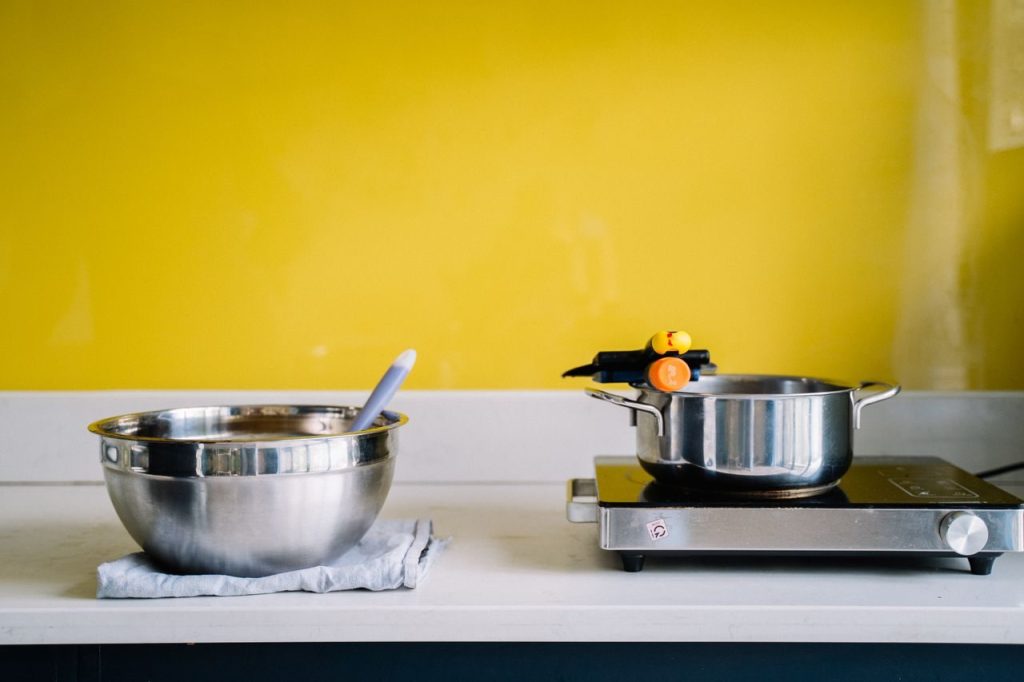
Follow the manufacturer’s guidance for the lid’s intended use, including any vent or other feature. Do not improvise a clamping or sealing arrangement on ordinary cookware. If the recipe requires specialist equipment, choose the appropriate documented vessel rather than attempting to turn a conventional pan and loose accessory into a substitute. A simple lid is useful within its design, not a reason to alter the cooking system without instructions.
Plan the lifting movement
Before uncovering hot cookware, have a stable appropriate place ready for the lid. Use suitable protective equipment and keep hands and face away from the path of escaping steam. A secure grip matters, especially if the knob is small or the lid has become slippery. Do not hold it awkwardly while searching for a space or balance it on a neighbouring vessel that is also in use.
Consider condensation and the position of the worktop as part of the movement. Follow the product instructions and handle it deliberately rather than shaking or tilting it unpredictably around other people. If the kitchen is crowded, clear the area before the checking stage. A lid may seem like a minor accessory, yet repeated awkward handling can make a simple simmer or serving step unnecessarily difficult during an otherwise organised meal.
Observe the food, not only the glass
A transparent lid can offer a view of the contents, but condensation and the arrangement of food may limit what you can judge. Visibility is not a replacement for recipe-specific checks or relevant food-safety guidance. If a dish needs its centre checked, looking through the lid at the surface does not automatically answer that question. Treat the window as a convenience rather than a guarantee of readiness.
If the liquid level or cooking situation needs attention, refer to the intended method instead of adding arbitrary amounts or changing the lid position without a reason. Covered and uncovered stages serve different purposes across recipes. Keep the process attended and follow the checks the recipe actually describes. A lid should help you carry out the method, not become an excuse to stop observing because the vessel appears self-contained.
Finish with care and storage
After cooking, follow the maker’s cooling and cleaning instructions for the lid material and its fittings. Do not apply a sudden cleaning treatment simply because the rest of the cookware is ready to wash. Keep the lid’s product reference if it is stored separately or shared between compatible vessels. This makes future questions about fit and permitted use easier to answer without relying on a vague memory of which set it came from.
Arrange storage so the lid can be retrieved without tipping a stack or reaching around heavy pots. A useful routine gives it a role in the recipe, a place during cooking and a stable home afterwards. That is more practical than collecting matching accessories with no clear purpose. Deliberate lid use comes from understanding the method and handling the accessory comfortably, rather than treating covered cooking as a universal setting for every meal.