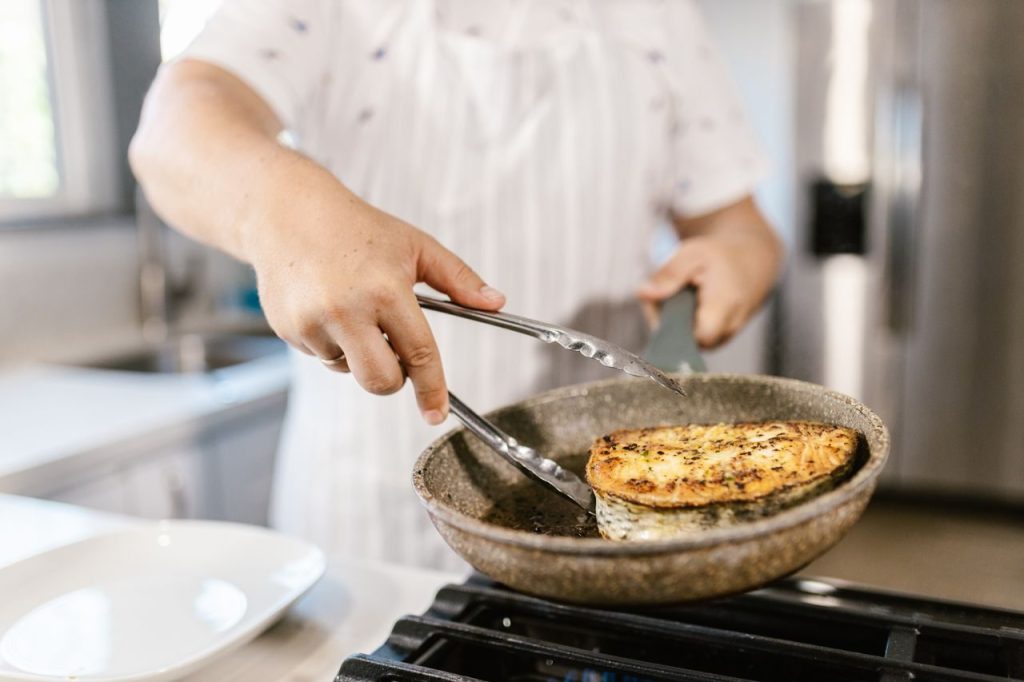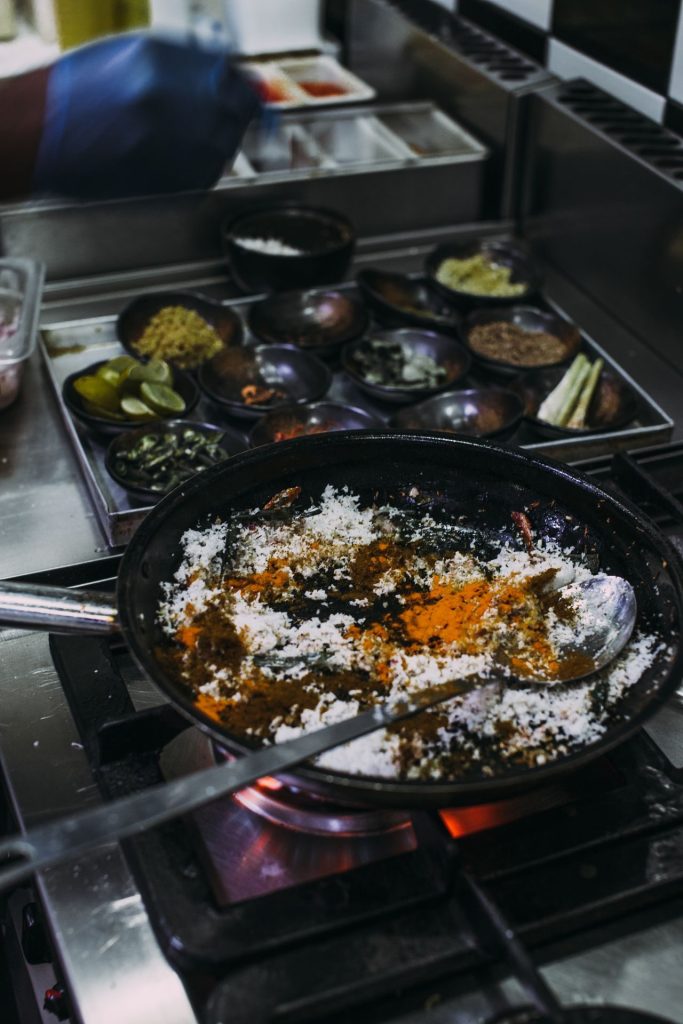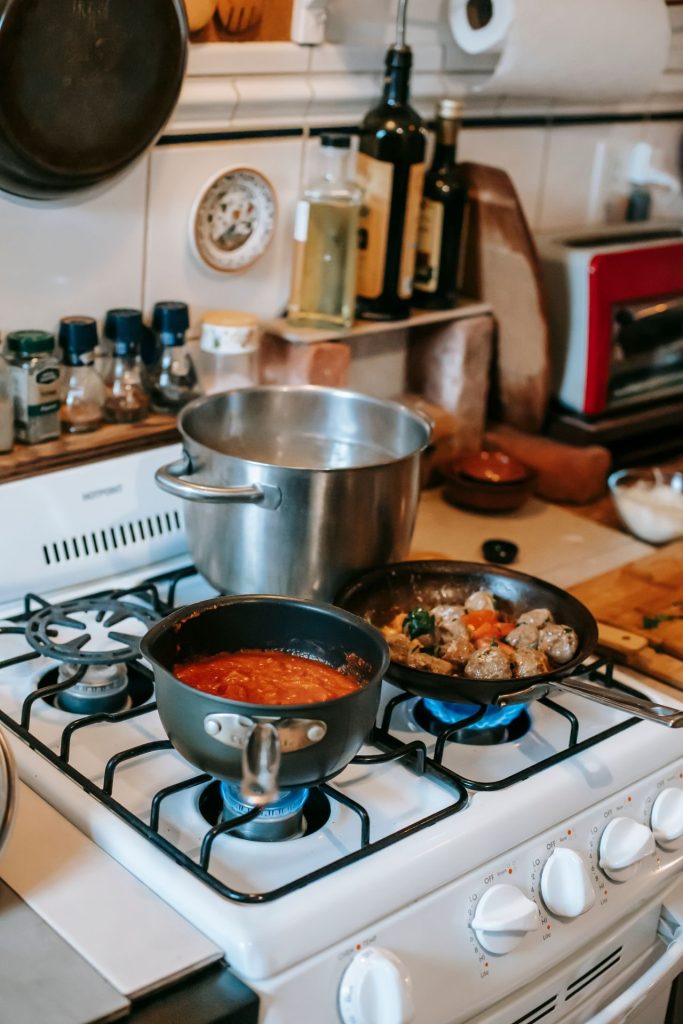
Pan side height and angle determine how much liquid remains in contact with ingredients and how freely you can move food during cooking. Choosing shapes that match the liquid volumes and stirring actions in regular meals reduces the need for extra vessels.
Most households cook sauces, stews and one-pan dishes that start with searing then move to simmering. A pan whose sides keep liquid from spreading too thinly supports both steps without constant adjustment of heat or repeated transfers.
Straight sides versus outward flare
Straight vertical sides hold a given volume of liquid in a smaller footprint. This keeps the base fully covered when reducing stock or wine, so the fond stays moist and scrapes cleanly. The same shape also limits how far ingredients can slide when stirred, which helps when browning batches of vegetables or meat without overcrowding.
Flared sides widen the surface area as volume increases. This suits tasks where rapid evaporation is wanted, such as reducing a thin pan sauce after deglazing. The slope also lets a spatula reach the full base without the handle catching on vertical walls. However, the same flare spreads liquid thinly once the volume drops, so small amounts of sauce can dry out before the desired consistency is reached.
Depth choices for portion sizes
A 5 cm depth works for single portions or quick sautés where little added liquid is needed. The low walls allow fast heat escape and make it simple to toss ingredients by wrist action rather than with a spoon. For meals that serve two to four people and include stock or sauce, 7–8 cm depth keeps the liquid level above the food while still leaving room to stir without spillage.
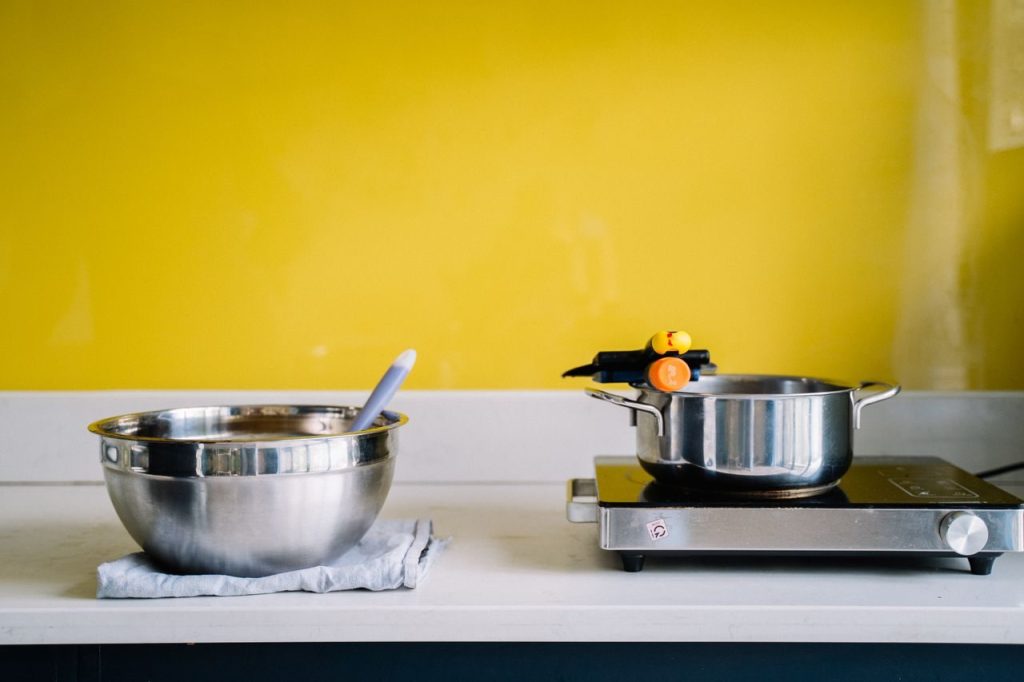
Deeper pans above 10 cm suit longer simmering of beans, grains or tougher cuts, but they require a correspondingly wide base to prevent the contents from sitting in a narrow column that heats unevenly. Manufacturers specify the internal dimensions on the product label; these measurements, not the external rim, determine usable capacity.
Base flatness and hob contact
Flat bases remain in full contact with ceramic or induction zones only when the pan diameter matches or slightly exceeds the marked cooking area. A base that curves upward at the edges creates cooler rings where food browns more slowly. Checking the base with a straight edge before purchase shows whether the contact area is adequate for the hob rings in use.
Induction manuals list the minimum base diameter required for the sensor to engage. Pans narrower than this limit will not heat at all on some models, regardless of material. Straight-sided pans often have wider usable bases than flared models of the same stated capacity because the sides do not slope inward.
Lid fit and steam control
A lid that sits inside the rim rather than on top reduces the escape of steam when simmering. This keeps the liquid level stable during long cooks and prevents the need to add extra water midway. Metal lids without glass inserts withstand oven temperatures listed in the appliance manual; glass lids must stay below the temperature marked on their knob or handle.
When steam needs to escape, a lid set slightly ajar on straight sides still covers most of the surface. Flared sides make partial covering less stable because the lid rests on a narrower contact line.
Stirring clearance and utensil choice
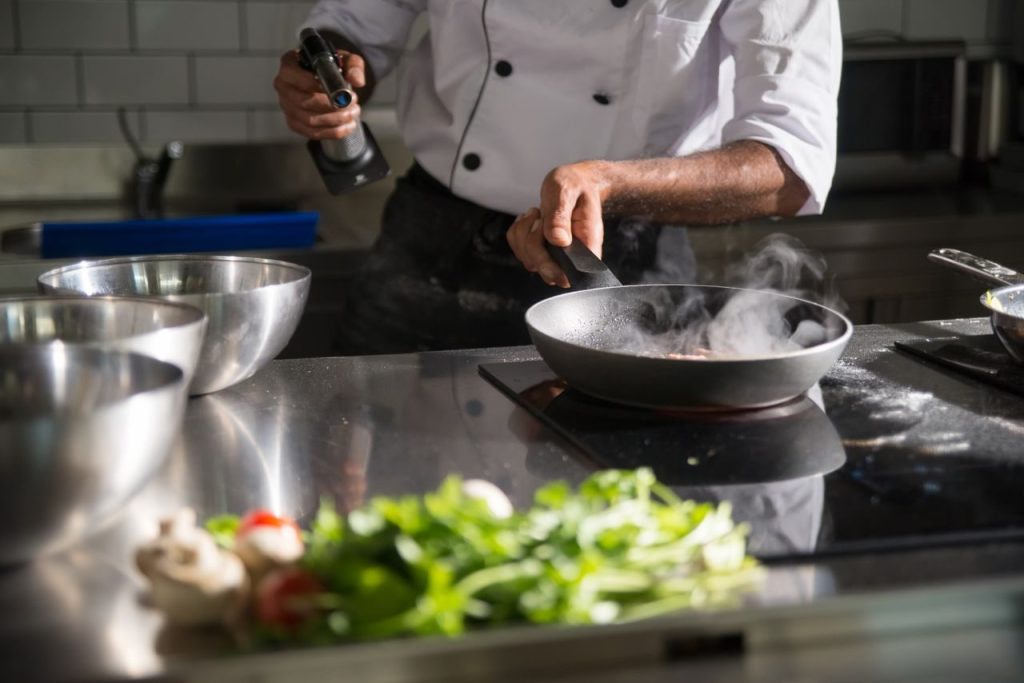
Vertical sides give a spatula or wooden spoon a clear path along the base without the handle riding up the wall. This matters when scraping fond during sauce making or when folding delicate items such as risotto. Flared sides require a shorter or angled utensil to reach the outer base without lifting food onto the slope.
Non-metal utensils are required on non-stick surfaces per the coating care instructions. Metal tools may be used on stainless or cast-iron interiors provided the surface is not scored; the manufacturer’s leaflet states the permitted materials.
Storage and stacking limits
Straight-sided pans of similar diameters nest more compactly than flared ones. Placing a folded cloth between each base prevents scratches on the interior when stored. Lids stored separately on a rack or hook avoid the need to balance them on top of stacked pans, reducing the chance of the stack toppling when the cupboard is opened.
Appliance manuals for dishwashers list maximum temperatures and cycle types suitable for each material. Repeated high-heat cycles can eventually affect non-stick performance even when the pan is labelled dishwasher-safe; hand washing with a soft brush preserves the coating longer.
Replacement indicators
Warped bases no longer sit flat on the hob and should be retired once the gap under a straight edge exceeds 2 mm across the diameter. Loose rivets or handles that rotate under normal grip indicate the fastening has failed; continued use risks sudden detachment during lifting. Surface pitting on stainless that cannot be removed with a manufacturer-approved cleaner signals material loss and warrants replacement.
Manufacturer care sheets give the maximum oven temperature for each model, including whether the lid and handle are included in that rating. Exceeding these limits voids any remaining warranty and can cause handles to deform or lids to crack.