Many households add pans without first measuring the actual space left in their cupboards or noting how many portions they prepare on an ordinary weeknight. This often leads to pieces that sit unused or force awkward stacking that damages surfaces over time. A more practical route begins with listing the number of people served at each meal and the dimensions of the storage area.
Once those figures are clear, choices about diameter, depth and material can be narrowed to what actually fits both the hob zones and the shelves. The following sections outline steps to match capacities to real usage rather than to an imagined complete set.
Measuring available cupboard dimensions
Start by recording the internal height, width and depth of each shelf or drawer that will hold cookware. Note any fixed obstructions such as pipes or hinges. These measurements determine whether a 28 cm frying pan can stand upright or must lie flat, and whether two saucepans can sit side by side without their handles overlapping.
Compare the recorded space against the base diameter and overall height listed in manufacturer specifications. A pan that requires 35 cm of vertical clearance will not fit a 28 cm shelf even if its base looks modest. Repeat the check for lids, which often need separate flat storage to avoid scratches on non-stick surfaces.
Listing typical portion sizes
Write down the number of servings prepared on most weekdays and at weekends. A household of two that cooks single portions on four evenings and a shared meal for four on the fifth needs different capacities from a family of four that prepares one large pot each night.
Convert those numbers into approximate volumes: a standard adult portion of stew occupies roughly 300 ml once cooked. A 2 litre saucepan therefore covers six portions with headroom for stirring. Record these volumes alongside the meals that recur most often so later purchases can be judged against actual demand rather than against marketing descriptions.
Matching base diameters to hob zones
Check the diameter of each hob zone and note the minimum and maximum base sizes recommended in the appliance manual. A pan base that is more than 2 cm smaller than the zone wastes energy and produces uneven heating on ceramic or induction surfaces. Conversely, an oversized base that overhangs the zone can damage the hob edges over repeated use.
Measure the base of any pan already owned and compare it with the new pieces under consideration. This prevents adding another 20 cm pan when the largest zone already accommodates only one such item at a time.
Deciding between stackable and standalone pieces
Stackable sets reduce shelf height but require all pieces to share the same material and finish so that lids remain interchangeable. Standalone pans allow different materials for different tasks, such as a stainless sauté pan for deglazing and a cast-iron skillet for searing, yet they occupy more floor space when stored.
Where cupboard height is limited to 20 cm, two stackable saucepans of 18 cm and 20 cm diameter often fit where two standalone pans of similar capacity would not. Where height is not constrained, separate pieces can be chosen to match the exact cooking steps that occur most frequently.
Allocating space for lids and handles
Lids frequently take more room than the pans themselves. Allocate a separate shallow drawer or vertical rack sized to the largest lid diameter. Handles that curve upward add height; measure them in the stored position to avoid underestimating clearance.
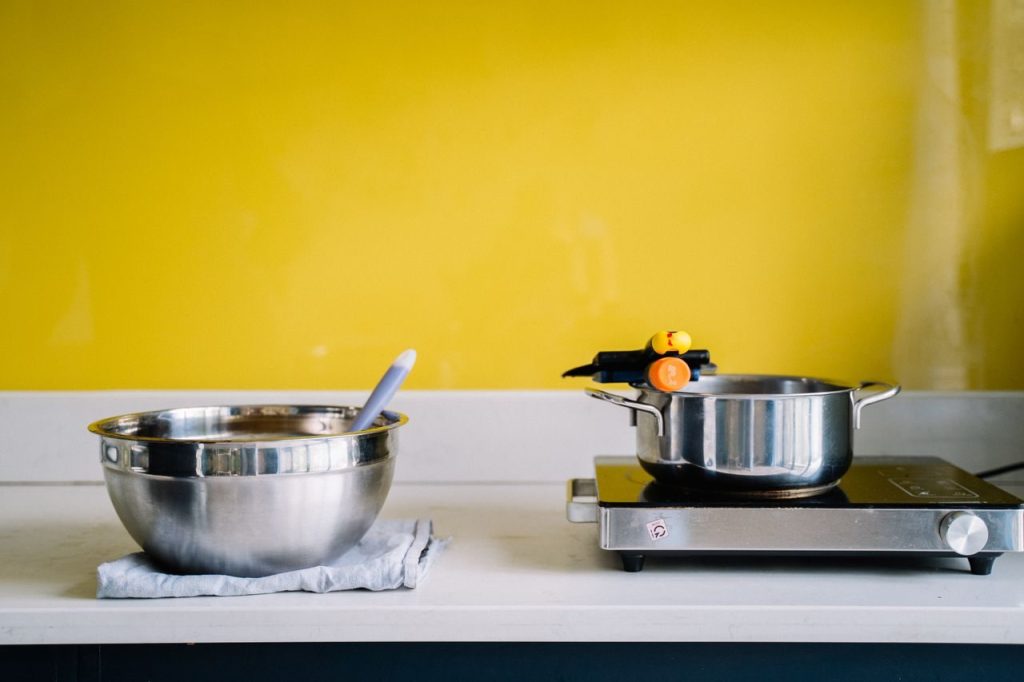
Where space is tight, consider pans with detachable handles only if the manufacturer confirms the locking mechanism remains secure after repeated heating cycles. Otherwise, choose fixed handles that can nest without pressure on the cooking surface.
Reviewing weekly meal patterns
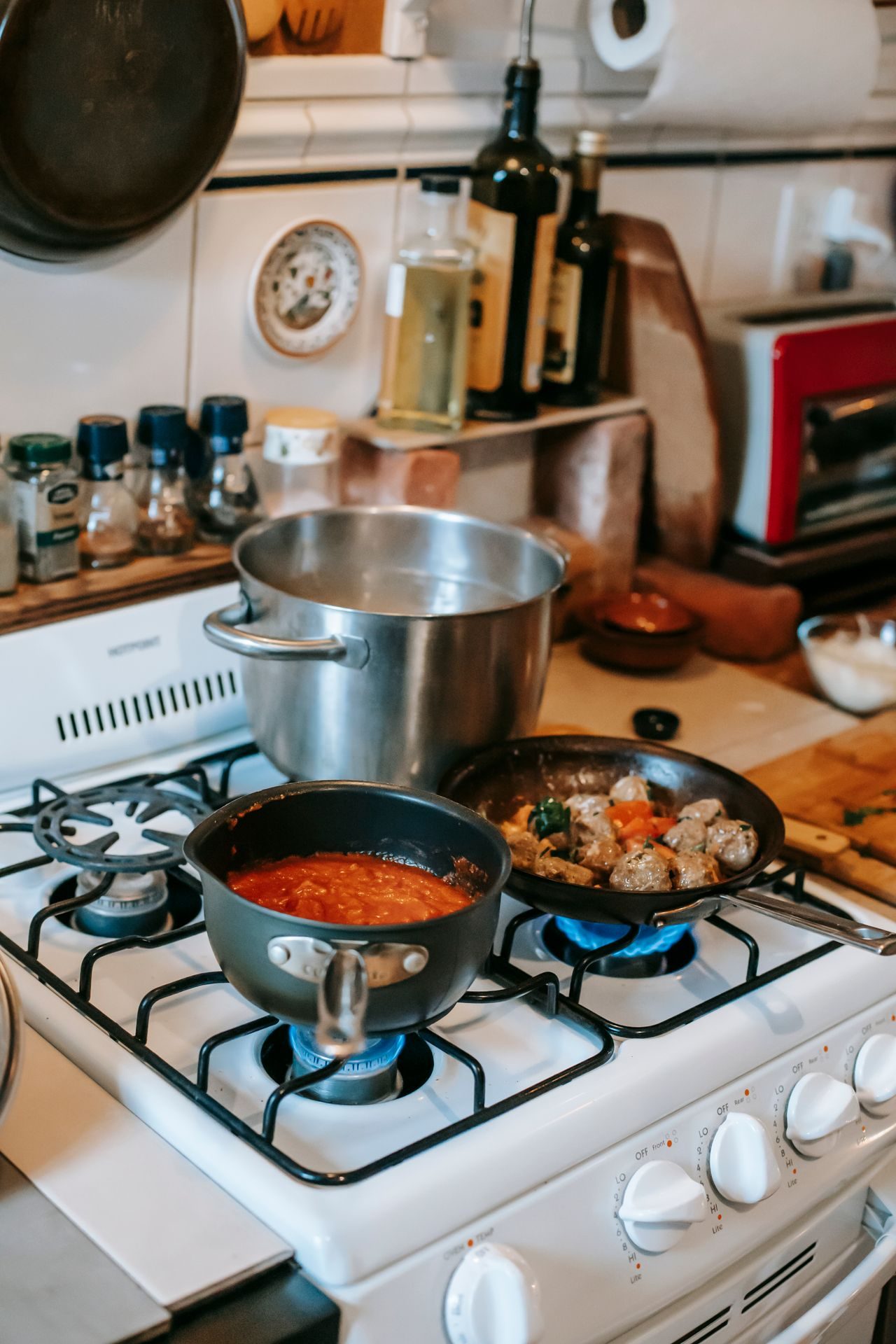
Map the sequence of dishes cooked on a typical week. If pasta sauce, rice and vegetables are prepared simultaneously on three evenings, three medium pans are needed rather than one large stockpot. If one-pot meals dominate, a single wide sauté pan may replace two smaller vessels.
Adjust the list of required capacities after two weeks of recording what was actually used. Remove any size that remained on the shelf during that period and note any size that was borrowed or improvised because the existing collection was insufficient.
Checking material limits against routine tasks
Read the care instructions supplied with each material. Cast iron requires drying immediately after washing and benefits from occasional oiling; it therefore needs accessible storage rather than being buried at the back of a cupboard. Non-stick coatings lose performance above certain temperatures, so they are best reserved for tasks that stay below medium heat.
Stainless steel tolerates higher temperatures and metal utensils but shows water spots if left to air-dry. These differences influence how often each piece can be used without extra maintenance steps that may not fit daily schedules.
Once the collection is limited to pieces that match both space and meal volumes, additions can be judged against the same criteria rather than against completeness. Over time the set remains usable because every item earns its place through repeated use rather than through potential future need.